
8 Signs Your Septic System Needs an Inspection Now, Not Next Month
If you own rental homes on septic in Fontana, you already know the pattern. A tenant texts about a slow drain, you hope it clears on its own, and two weeks later you have sewage in a shower pan and a habitability complaint on your desk. The signs your septic system needs an inspection almost always show up before the mess does. Understanding septic warning signs landlords should watch for is crucial—catching them early is the difference between a routine pump-out and a torn-up drain field.
This list covers the eight warning signs worth acting on right away, in plain language. No scare tactics, no upsell pressure. For each one, you get what it usually means, what an inspector actually checks, and what the next step looks like so you know exactly what you are paying for.
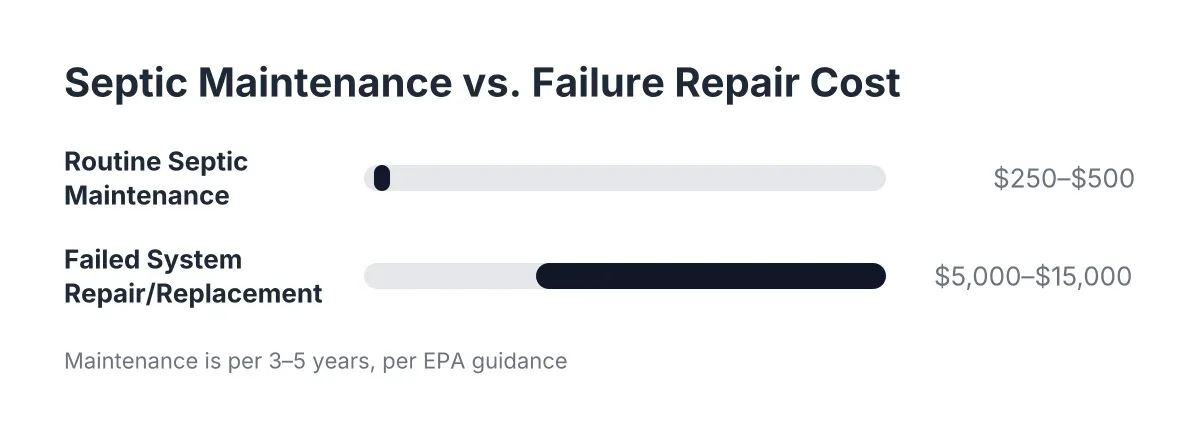
One number frames the whole conversation. According to U.S. Environmental Protection Agency guidance, regular septic maintenance runs $250 to $500 every three to five years, while repairing or replacing a failed conventional system runs $5,000 to $15,000. Every sign on this list is a chance to stay on the cheap side of that gap.
1. Slow Drains in More Than One Fixture
One slow sink is usually a clogged pipe. Slow drains in two or more fixtures at the same time, especially on the lowest floor, point to the tank or the line between the house and the tank. That is a system problem, not a plunger problem.
Here is how to tell the difference before you call anyone. Run water in the kitchen, then flush a toilet on the same level. If both struggle, or if flushing the toilet makes a tub gurgle, the blockage sits downstream of both fixtures. For a landlord, this test takes a tenant two minutes over the phone and saves you a wasted trip.
An inspector will open the tank lid, check the liquid level, and look at the inlet baffle. High liquid means the tank is full or the drain field is not accepting water. Low liquid can mean a leak. Either way, you get a specific answer instead of another round of drain cleaning that treats the symptom.
2. Gurgling Pipes After Flushing or Draining
Gurgling is air fighting its way through a partial blockage or a tank that has no room left. It often shows up weeks before a full backup, which makes it one of the most useful early septic warning signs landlords need to recognize before problems escalate.
Tenants tend to ignore gurgling because nothing is overflowing yet. Tell them to report it. A property manager in Fontana who trains tenants to flag gurgling and slow drains on day one usually schedules a pump-out on their own timeline. The one who waits for silence to turn into standing water schedules an emergency call at whatever the calendar allows.
3. Sewage Odors Inside or Near the Tank and Drain Field
A working septic system does not smell. Persistent sewage odor near drains, above the tank lids, or over the leach field means gases or effluent are escaping where they should not. Outdoors, it often means the tank is full or the drain field is saturated and pushing wastewater toward the surface.
Do not mask it and move on. An air freshener in a rental bathroom does nothing for the untreated wastewater working toward the yard. During a septic system inspection, the inspector traces the odor to its source: a dried-out trap, a failed tank lid seal, a full tank, or a leach field that has stopped absorbing. Each of those has a different fix and a different price, and the report should say which one you have.
4. Wet Spots or Lush Green Grass Over the Leach Field
The drain field should look like the rest of the yard. A stripe of bright green grass, soggy soil in dry weather, or standing water over the field means effluent is surfacing instead of soaking into the ground. This is one of the clearest signs your septic system is failing rather than just full.
The distinction matters for your wallet. A full tank needs a pump-out, which is routine money. A failed leach field needs repair or replacement, which is the $5,000 to $15,000 end of the EPA's range. An inspection tells you which side of that line you are on before you commit to anything.
Expect the inspector to probe the field, check for ponding, and run water through the system to watch how the field accepts it. If the field is saturated, a pump-out buys you time but does not fix the field. A straight answer up front beats paying for repeat pump-outs on a system that needs repair.
5. Sewage Backing Up Into Tubs, Showers, or Floor Drains
Backup into the lowest fixtures in the house is the system telling you it has no capacity left. Wastewater takes the easiest exit, and that exit is usually a first-floor tub or a floor drain. At this stage you have passed the warning signs and reached an active failure.
Act in this order:
- Stop all water use in the house immediately. Every flush and load of laundry adds to the backup.
- Keep tenants and kids away from any standing sewage. It is a health hazard, not just a mess.
- Call for an emergency pump-out and inspection together, not just the pump-out.
- Ask the crew what caused it. A backup always has a cause: an overdue tank, a clogged line, a failed baffle, or a saturated field.
For a landlord, step four is the one that protects you. Pumping the tank without finding the cause means the same tenant calls you again in three months. The inspection report also gives you dated documentation if the tenant dispute ever escalates.
6. You Cannot Remember the Last Pump-Out
No paperwork is a warning sign by itself. If you bought a rental and the seller had no pumping records, assume the tank is overdue until an inspection proves otherwise. Sludge builds silently; the tank works fine right up until solids reach the outlet and start flowing into the leach field, where they do permanent damage.
Tank size sets the clock. San Bernardino County's minimum capacity table requires a 1,000-gallon tank for a 3-bedroom home and 1,500 gallons for a 5-6 bedroom home, according to the San Bernardino County Department of Public Health. A 1,000-gallon tank serving a full rental household fills faster than the same tank under a retired couple.
Here is a scenario every multi-property landlord recognizes. You own three rentals in and around Fontana, each on septic, each bought at a different time, and none with records. Instead of guessing, get a baseline inspection at all three, log the tank size and sludge level for each, and set a recurring pump-out schedule per property. As of 2026, that one afternoon of paperwork replaces years of surprise tenant calls and turns septic from an emergency line item into a scheduled one.
7. Spiking Water Use or a Fixture That Never Stops Running
Your septic system can only process so much water per day. A running toilet in a rental can go unreported for months, and according to the U.S. Environmental Protection Agency, a single leaky or running toilet can waste as much as 200 gallons of water per day. That extra load pushes solids into the drain field before the tank can settle them out.
Watch the water bill on any rental with a well-fed septic system, or the meter where there is one. A sudden jump in use often shows up before any drain slows down. Fixing a $15 flapper valve is the cheapest septic repair you will ever make.
8. Grease Problems in the Kitchen Line
Fats, oils, and grease harden inside pipes and inside the tank, where they form a scum layer that shortens the time between pump-outs. Research published in the International Journal of Environmental Science and Technology estimates 30 to 40 percent of sewer clogs come from fat, oil, and grease deposits. On a septic system, that grease does not disappear; it collects.
For rentals, this is a tenant education issue as much as a plumbing one. Put a one-line rule in the lease or move-in packet: no grease down the kitchen drain, ever. If a property has a history of kitchen-line clogs, ask the septic crew to check the scum layer thickness at the next pump-out and note it in the report. A thick scum layer on a short interval tells you the grease rule is being ignored.
How to Recognize Septic Warning Signs Landlords Should Act On
Any one sign on this list earns a phone call. Two or more signs at the same property earn an inspection scheduled this week, because combinations tell a clearer story than any single symptom.
Use this quick sorting rule across your properties:
- Slow drains plus gurgling: likely a full tank or a blocked line. Start with a pump-out and a look at the baffles.
- Odors plus wet spots over the field: likely a drain field problem. Get a leach field inspection before paying for repeat pump-outs.
- Backup into fixtures: active failure. Stop water use and get an emergency pump-out and inspection together.
- No records plus no symptoms: get a baseline inspection anyway and start a schedule.
One honest caveat. A visual check and a pump-out cannot see everything; roots inside a distribution line or a collapsed pipe under the yard sometimes only show up with a camera or during a full septic system inspection with flow testing. If the report flags something the crew cannot confirm from the tank, ask what a deeper look would show before approving any repair.
What Happens After You Call
When you search "septic inspection near me" or "septic tank pumping near me" from a Fontana rental at 7 a.m., you want a person who knows the area, not a national dispatch queue reading a script. Septic is less common here than people assume; the U.S. Environmental Protection Agency puts California's rate of septic system use at about 10 percent of homes, among the lowest of any state. That makes a local septic pumper who works these systems daily worth holding onto once you find one.
A typical visit on a routine call runs like this: the crew locates and opens the tank, measures sludge and scum, checks the inlet and outlet baffles, pumps the tank if it needs it, and walks the drain field for wet spots or odor. You get told what they found in plain terms, what needs attention now, and what can wait. Nothing on that list should be a mystery line item.
For a landlord running several properties, the endgame is simple. Get each system inspected once, fix what is flagged, and put every tank on a recurring pump-out schedule with dated records. Do that, and the signs your septic system throws off stop being emergencies and start being reminders you already saw coming. Routine septic tank cleaning services on a calendar cost far less than one failed drain field, and your tenants stop calling you about drains at all.
If you need septic tank pumping, Fontana Septic can help.
Prefer to talk it through? Call (909) 316-2368 — a quick call is usually the fastest way to get a straight answer for your situation.