
Septic Tank Inspection Cost: What Fontana Buyers Actually Pay For
If you just bought a house on septic, or you are about to, someone has probably told you to get the tank inspected. The next question is always the same: what does a septic tank inspection cost, and what are you actually paying for? This guide breaks down what an inspection covers, why the price moves up or down, and how to read the report you get back. No upsell pressure, no vague ranges with nothing behind them. Just a plain explanation of the job, the way a local Fontana septic crew would explain it over the phone.
That matters more here than in most of California. According to U.S. Environmental Protection Agency data, only about 10% of California homes run on septic systems, compared to a high of 55% in Vermont. So most people around you, including some home inspectors and realtors, have never dealt with one. That is exactly how first-time septic owners end up confused about what an inspection includes and what a fair price looks like.
What a Septic System Inspection Actually Covers
A septic system inspection checks the health of the whole system: the tank, the pipes running to and from it, and the leach field where the water finally goes. It is not just a guy lifting a lid and glancing inside. A real inspection tells you whether the system is doing its job and how much life it has left.
Here is what a septic tank inspector checks on a standard visit:
- Tank location and access. Finding the tank and exposing the lids. On older Fontana properties this alone can take time if no one knows where the tank sits.
- Sludge and scum levels. Measuring the solids at the bottom and the grease layer on top. This tells you how overdue the tank is for a pump-out.
- Tank condition. Looking for cracks, corrosion, root intrusion, and damaged baffles. Baffles are the fittings that keep solids from escaping into your drain field.
- Inlet and outlet flow. Running water in the house and confirming it moves through the tank the way it should.
- Leach field condition. Checking for soggy ground, sewage odor, or standing water over the drain field. These are the signs of a field that is failing.
- Signs of past trouble. Evidence of previous backups, slow drains, or repairs that were never finished.
Some inspections add a camera run through the lines. A septic tank camera inspection costs more because it takes extra equipment and time, but it is the only way to see a cracked or root-clogged pipe without digging.
Why an Inspection Usually Comes Up During a Home Sale
Most septic inspections happen because a property is changing hands. In San Bernardino County, a general home inspection does not cover the septic system in any real depth. The home inspector may flag that the property is on septic and recommend a specialist. That note in the report is what sends most first-time buyers searching for answers.
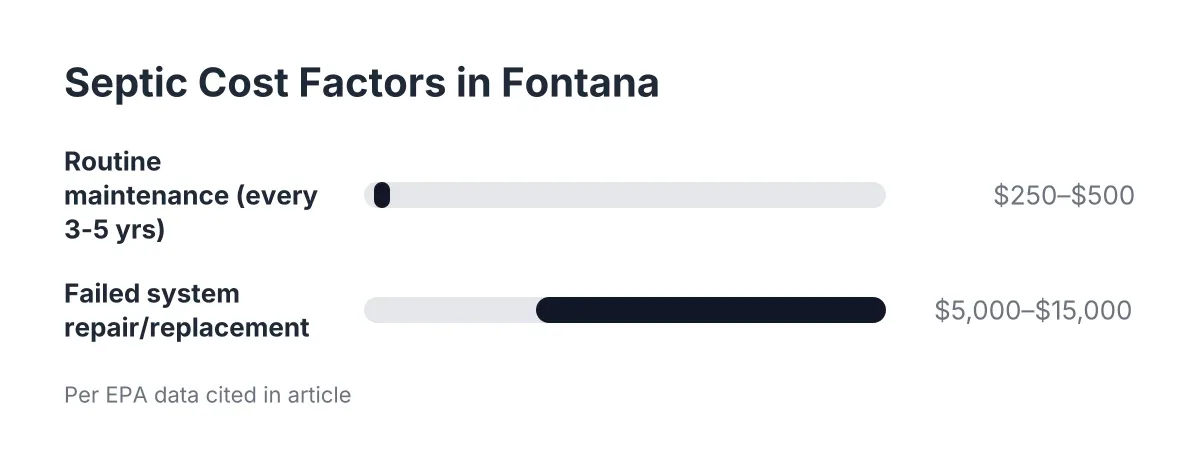
Here is the part buyers get wrong: the home inspection cost you already paid does not buy you septic answers. A home inspector checks the house. A septic inspector checks the system buried in the yard, which can cost more to replace than a new roof. According to the U.S. Environmental Protection Agency, repairing or replacing a failed conventional system runs $5,000 to $15,000, while regular maintenance costs $250 to $500 every three to five years. An inspection before closing is how you find out which side of that math you are buying into.
Whether the buyer or seller pays is negotiable. In practice, buyers usually order and pay for the septic inspection during their inspection contingency period, the same window as the general home inspection. Some sellers pay for a pump-out and inspection up front to keep the deal moving. Either way, the report belongs to whoever paid for it, so if you are the buyer, order it yourself.
What Does a Septic Tank Inspection Cost?
A septic tank inspection typically costs a few hundred dollars for a standard residential visit, with the price rising when the tank needs to be pumped, located, or dug up first. A basic visual check sits at the low end. Additionally, a full inspection with pumping, which is what most home sales call for, costs more because pumping is the only way to see the tank walls and baffles.
That is the honest answer to the septic tank inspection cost question: it is not one number, it is a short list of variables. Any company that quotes you a single flat price over the phone without asking about tank access, pumping history, or system age is guessing, and you will find out how they handle the difference when the truck arrives.
The reason pumping matters so much is simple. An inspector cannot judge the condition of a tank that is full. Sludge hides cracks, and a full tank makes it impossible to watch how water flows through the baffles. So for a real estate transaction, plan on the combined price of a pump-out plus inspection, not the inspection alone. Many local crews price the two together, which usually works out cheaper than booking them as separate visits.
What Drives Septic Tank Inspection Costs Up or Down
Septic tank inspection costs move based on five main factors: access to the tank, whether pumping is included, tank size, system type, and how much diagnostic work the visit requires. Two neighbors on the same Fontana street can pay noticeably different amounts for the same service because of these variables.
Tank access and locating
If your tank lids sit at grade under a couple of green covers, access costs you nothing. If the tank is buried under 18 inches of soil, a patio, or landscaping nobody wants to disturb, the crew has to locate it and dig. Locating an unmapped tank on an older property can add real labor time. First-time owners can save money here: ask the seller or the previous owner where the tank and lids are before the inspection, and get it in writing if you can.
Pumping included or not
As covered above, this is the single biggest swing in the price. A look-only inspection is cheaper but tells you less. For a purchase decision, the pump-and-inspect combination is worth the difference, because it is the version that catches cracked tanks and failed baffles before you own them.
Tank size
Bigger tanks take longer to pump and cost more per visit. San Bernardino County Department of Public Health sizing tables require a 1,000-gallon tank for a 3-bedroom home and 1,500 gallons for a 5-to-6 bedroom home. So if you are looking at a larger house, or a landlord evaluating a duplex where two units share one system, expect the pumping portion of the bill to run higher than the standard quote.
System type and age
A basic gravity system with one tank and a leach field is the cheapest to inspect. Systems with pumps, risers, distribution boxes, or older cesspool-style setups take more time to evaluate. Age matters too. A 40-year-old system deserves a closer look at the drain field, because that is where old systems fail first, and drain field replacement is the expensive end of septic work.
Extra diagnostics
Camera inspection of the lines, dye testing, and leach field probing all add cost. None of them are automatic. A good septic tank inspector recommends them when something in the basic inspection raises a question, such as slow drains in the house with a tank that looks fine, which points at a line or field problem.
A Realistic Fontana Scenario
Take a common local situation. A couple closes on a 3-bedroom house on the north side of Fontana, their first home on septic. The general home inspection report includes one line: "Property served by private septic system, recommend evaluation by septic specialist. Seller states tank was last pumped approximately 8 years ago."
Eight years without a pump-out on a 1,000-gallon tank means the inspection must include pumping; there is no useful look-only option at that point. The crew locates the tank, digs to the lids because there are no risers, pumps it, and inspects the empty tank. They find the tank itself sound but the outlet baffle deteriorated, and they note minor root intrusion at the inlet.
The buyers pay for pumping, digging to access the lids, and the inspection with a written report. The baffle repair becomes a repair credit negotiated with the seller. Total out of pocket lands in the hundreds, and it prevented them from inheriting a problem that, left alone, would have pushed solids into the leach field. A ruined leach field is the $5,000-to-$15,000 category of failure the EPA warns about, not the few-hundred-dollar category.
For a small landlord, the same logic scales. If you own a duplex or a few rental units on shared septic around Fontana, an inspection before lease turnover costs a fraction of the vacancy loss and emergency pump-out fees that follow a tenant-reported backup.
How Long a Septic Inspection Takes
A standard septic inspection with pumping takes about one to three hours on site. The range depends on the same factors that drive price: how hard the tank is to find, how deep the lids are buried, how full the tank is, and whether the inspector adds a camera run or field probing.
If the lids are exposed and the pumping history is known, the visit runs fast. If the crew has to probe the yard to locate a tank nobody has opened in a decade, budget for the long end. For a home sale, schedule the inspection early in your contingency period, not the last week. If the report flags something, you need time to get repair estimates and negotiate before your deadline.
Reading the Report Without Getting Played
The report is where first-time owners feel most exposed. You get back a document full of terms like baffles, effluent, and infiltration, and you have no way to know which findings are urgent and which are routine. Here is a plain-language framework.
Routine findings, no alarm needed:
- Tank was due or overdue for a pump-out. This is maintenance, not damage. Most tanks need pumping every three to five years.
- Lids need risers for easier access. A convenience upgrade that saves digging costs on every future visit.
- Minor root intrusion at a lid or inlet. Common, and usually a modest fix.
Findings worth a repair estimate before you panic:
- Damaged or missing baffle. A real problem because it lets solids reach the drain field, but the fix is typically a component repair, not a system replacement.
- Slow flow at the outlet. Could be a line issue; a camera inspection tells you whether it is roots, a sag, or a break.
Findings that change the deal:
- Sewage surfacing over the leach field, or the field stays saturated. This points at drain field failure, the expensive end of septic repair.
- Cracked or collapsing tank. Tanks can be replaced, but this belongs in the purchase negotiation, not on your future to-do list.
However, do not turn a flagged report into a diagnosis on your own. A note like "evidence of past backup" can mean a one-time clog from the previous owners or an early sign of field failure, and the difference is thousands of dollars. That is a judgment call for a septic professional standing over the open tank, not something to settle from the paperwork.
One more thing worth knowing as a new owner: the habits inside the house drive the health of the system outside. A single running toilet can waste as much as 200 gallons of water per day, according to the U.S. Environmental Protection Agency, and all of that water lands on your leach field. Fixing leaks fast is the cheapest septic maintenance you will ever do.
Failed Septic Inspection: What Happens Next
A failed septic inspection is not the end of a purchase, and it is not always a five-figure problem. The next steps depend on what failed and who is holding the report.
- Get the specific finding in writing. "Failed" is not a diagnosis. You need to know whether the issue is the tank, the baffles, the lines, or the leach field, because those carry different price tags.
- Get a repair estimate from a septic company, not a general contractor. Septic repair is its own trade. A crew that pumps and inspects tanks every day can tell you whether a baffle repair solves it or the field is done.
- Negotiate with the numbers in hand. As a buyer, a documented failure plus a written estimate is leverage for a price reduction or repair credit. As a seller, fixing a small item before listing beats losing a buyer over an unknown.
- Do not skip the reinspection. If repairs happen before closing, have the work verified. A receipt is not the same as a working system.
For landlords, add one step: check whether the finding triggers any county health requirements. A surfacing sewage condition at a rental is a code enforcement issue, not just a maintenance line item, and the timeline stops being yours to choose.
Getting a Straight Quote in Fontana
When you call around comparing the cost of a septic tank inspection in the Fontana area, the questions you ask matter more than the number you hear first. A quote is only comparable if both companies are pricing the same job.
Ask each company these five things:
- Does the price include pumping, or is that separate?
- What happens if the tank has to be located or dug to? Is digging billed by depth, by time, or flat?
- Do I get a written report with photos, or a verbal summary?
- Is a camera inspection available if the basic inspection finds a line problem, and what does it add?
- Who actually shows up? A local crew that does septic work every day, or a dispatch service subcontracting the job?
That last question is the quiet one that separates operators. National directories and franchise dispatch lines route your call through people who have never seen a Fontana leach field. A local septic pumper can tell you on the phone what tanks in your neighborhood tend to look like, how deep lids usually sit, and whether your street's soil drains well. That knowledge shows up in the accuracy of the quote and the quality of the report.
The bottom line for a first-time owner: a septic inspection is one of the cheaper checks you will pay for in a home purchase, and it guards against one of the most expensive failures a property can have. Know what the price includes, insist on pumping when the history is unknown, and read the report with the framework above. Do that, and you will never pay for more inspection than you need, or less than the property deserves.
If you need septic tank pumping, Fontana Septic can help.
Prefer to talk it through? Call (909) 316-2368 — a quick call is usually the fastest way to get a straight answer for your situation.