
Septic Tank vs. Cesspool: Which Is Right for You?
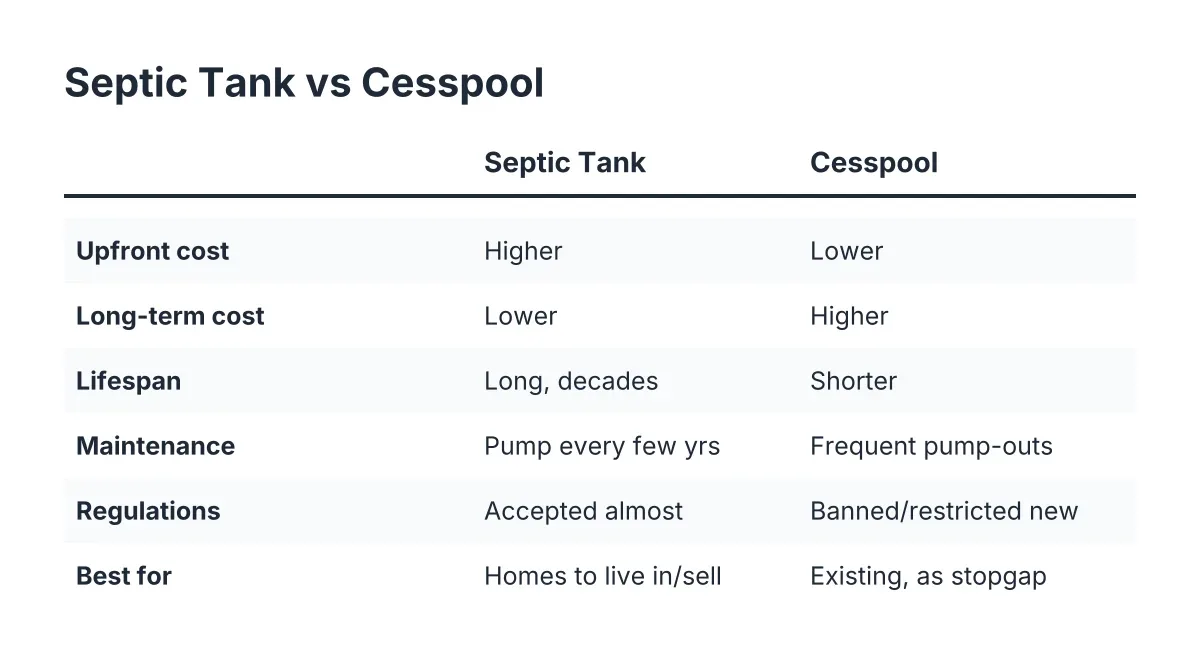
If you need an on-site wastewater system, your two main options are a septic tank or a cesspool, and the septic tank vs cesspool question comes down to treatment. A septic tank separates solids and sends the liquid to a leach field for real treatment in the soil; a cesspool is a lined pit that lets everything soak straight into the ground. In short: a septic tank wins for almost any home you plan to keep, while a cesspool only makes sense if you already have one and local rules still allow it. Many areas, including much of California, no longer permit new cesspools at all. Here is how the two compare, plainly and without a sales pitch.
| Criterion | Septic Tank | Cesspool |
|---|---|---|
| Upfront cost | Higher; tank plus leach field installation | Lower; a single lined pit |
| Long-term cost | Lower; routine pump-outs keep it healthy for decades | Higher; more frequent pumping and eventual replacement or conversion |
| Lifespan | Long; the tank and drain field typically last decades with care | Shorter; the pit clogs as soil around it seals up |
| Maintenance | Pump-out every few years plus periodic inspection | Frequent pump-outs; harder to inspect and service |
| Regulations | Accepted almost everywhere | Banned or restricted for new installs in many areas |
| Best for | Homes you plan to live in or sell | Older properties that already have one, as a stopgap |
Septic Tank: Strengths and Trade-offs
A septic tank is a buried, watertight tank that takes everything from your drains. Solids sink to the bottom as sludge, grease floats to the top as scum, and the liquid in the middle flows out to a leach field, sometimes called a drain field. The soil in that field filters and treats the liquid before it reaches groundwater. That two-step design is the whole point: the tank holds the solids, and the soil finishes the job.
The strengths are real. A well-built septic system handles a full household for decades. Routine septic tank pumping every few years keeps the sludge layer from reaching the outlet and pushing solids into the leach field. Lenders, county inspectors, and home buyers all understand septic systems, so a working one rarely blocks a sale. If something goes wrong, the parts are serviceable: a septic tank inspector can find the problem, and a crew can repair a baffle, a line, or a section of drain field without starting over.
The trade-offs are cost and space. Installing a tank and leach field costs more up front than digging a pit, and the drain field needs open ground with soil that drains well. You also have to respect the system: no grease down the drain, no flushing wipes, and no skipping pump-outs. Skip the maintenance and solids reach the leach field, and drain field repairs cost far more than any pump-out. Our page on how routine septic tank cleaning prevents system failure walks through exactly how that damage builds up.
Cesspool: Strengths and Trade-offs
A cesspool is simpler: a pit lined with brick, block, or concrete rings with open joints. Wastewater flows in, and the liquid seeps out through the walls and bottom into the surrounding soil. There is no separate leach field and no real treatment step. The pit holds solids and leaks liquid; that is the whole system.
The honest strengths: a cesspool is cheap to build, fits on a small lot, and has no moving parts. If your Fontana-area property already has one and it still drains, it can keep working for a while with regular pump-outs. For an older home you plan to sell or redevelop soon, keeping an existing cesspool alive can be the cheaper short-term move.
The trade-offs are serious. Because untreated wastewater soaks straight into the ground, cesspools can contaminate groundwater, which is why many jurisdictions ban new ones and some require replacing old ones at the point of sale. The soil around the pit slowly seals with grease and fine solids, so the cesspool drains slower every year until backups start. When a cesspool fails, you cannot repair it the way you repair a leach field; the usual fix is a new pit or a full conversion to a septic system. You are paying less now and more later, with a regulatory clock ticking in the background.
Septic Tank vs Cesspool: The Deciding Factors
Cost drivers
Septic costs more up front; cesspools cost more over time. A septic system needs a tank, piping, and a leach field, which means more digging and more material on day one. A cesspool is one hole with a liner. But the cesspool needs pumping more often, fails sooner, and often has to be replaced with a septic system anyway when rules or soil conditions force the issue. If you plan to own the home more than a few years, the septic system is the cheaper choice on a total-cost basis.
Lifespan
A septic system outlasts a cesspool in most homes. With regular pump-outs and a healthy drain field, septic tanks typically serve for decades. A cesspool's life depends on how fast the surrounding soil seals up, and once it seals, the pit is done. There is no leach field to repair or rest; the soil around the pit is the treatment area and the failure point at the same time.
Installation and regulations
New cesspools are off the table in many places, so for new construction this is rarely a real choice. Health departments in much of the country, including California, restrict or prohibit new cesspool installs because of groundwater concerns. Septic systems remain the accepted standard. If you are building or replacing a failed system near Fontana, expect the county to point you toward a septic tank and leach field, not a pit.
Maintenance
Both need pumping, but the septic tank rewards the effort and the cesspool only buys time. A septic pump-out removes sludge and scum before they harm the leach field, and a professional septic tank pumping visit also gives the crew a look at baffles and liquid levels. Pumping a cesspool empties the pit but does nothing about the sealed soil around it, so the interval between pump-outs keeps shrinking as the pit ages. Either way, a septic system inspection every few years catches slow drains and rising levels before they become a backup in your house.
Situational fit
Match the system to how long you will own the property. A septic tank fits owners who want a system they can maintain, inspect, and hand to the next buyer without a fight. A cesspool fits one narrow case: the property already has one, it still drains, local rules allow you to keep it, and you are not planning to hold the property long. Outside that case, the septic system wins.
Which Should You Choose?
Choose Septic Tank if:
- You are building new or replacing a failed system; in most areas it is your only permitted option.
- You plan to own the home for years and want predictable maintenance instead of surprise backups.
- You expect to sell someday; buyers, lenders, and inspectors all accept a working septic system.
- You have the yard space and soil for a leach field.
Choose Cesspool if:
- Your property already has a working cesspool and local rules let you keep using it.
- You need a short-term bridge before a planned sale, teardown, or sewer connection.
- You accept more frequent pump-outs and a firm end date on the system's life.
For most Fontana homeowners, the answer is the septic tank. The cesspool is not a competing choice; it is a legacy system you manage until you replace it.
Common Questions
How much does it cost to pump out a septic tank?
Pricing depends on tank size, how full it is, how easy the lid is to reach, and local disposal fees, so quotes vary from job to job. A tank buried deep with no riser costs more to service than one with easy access. The honest way to price it is a direct conversation about your specific tank, which is exactly what a local septic pumper can give you over the phone.
Should I use Ridex in my septic?
Additives are not a substitute for pumping. A septic tank already contains the bacteria it needs from normal household waste, and no additive removes the sludge layer that builds on the bottom. Regular pump-outs and sensible habits, like keeping grease and wipes out of the drains, do more for your system than anything in a bottle.
Where can I find septic tank pumping services near Fontana, CA?
We serve Fontana and the immediate surrounding area with septic pumping, inspection, and repair, and you talk to a local crew, not a call center. You can read about our septic tank pumping in Fontana or call for a straight answer about your system. If you searched "septic pumper near me" from Fontana, that is us.
Does the septic tank vs cesspool difference matter when buying a home?
Yes, more than most buyers expect. When weighing septic tank vs cesspool systems on a property you are buying, know that a cesspool may need replacement soon and some jurisdictions require upgrades at the point of sale. Order a septic system inspection before you close so you know what you are inheriting. A working septic tank is an asset; an aging cesspool is a future project with a price tag.
If you need septic tank pumping, Fontana Septic can help.
Prefer to talk it through? Call (909) 316-2368 — a quick call is usually the fastest way to get a straight answer for your situation.