
7 Septic System Failure Signs Fontana, CA Landlords Should Never Ignore
If you own rental property on septic in or around Fontana, CA, the septic failure signs landlords learn to spot early are the difference between a $350 pump-out and a five-figure drain field replacement. Most articles on this topic jump straight to a sales pitch. This one does the opposite: it walks through the three warning signals that matter most, wet soil, sewage odor, and slow drains, plus four more that tenants usually report before a system fails outright. Each one tells you something specific about what is going wrong underground, and each one points to a different next step.
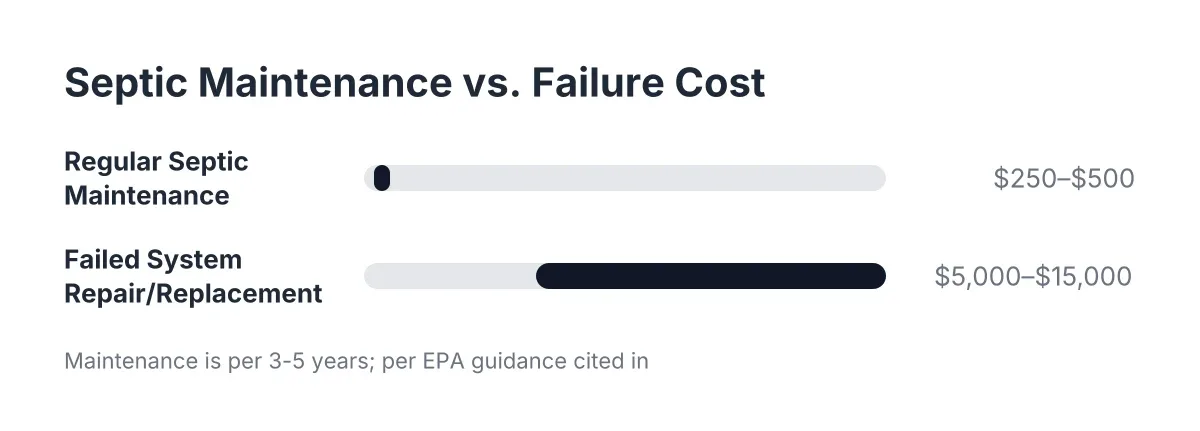
Here is the short version for a busy landlord. Septic failures develop slowly. The signs show up weeks or months before sewage surfaces in a yard or backs up into a unit. Catch them early and you are usually looking at a pump-out or a minor repair. Ignore them and you can end up replacing drain lines that cannot be salvaged once solids clog them. According to U.S. Environmental Protection Agency guidance, regular septic maintenance costs $250 to $500 every three to five years, while repairing or replacing a failed conventional system runs $5,000 to $15,000. That gap is the whole argument for reading the list below.
1. Wet, Soggy Soil Over the Tank or Drain Field
Soggy ground near the septic tank or over the leach field is the single most reliable sign of a failing system. A healthy drain field disperses clarified liquid down through gravel and soil. When the field clogs or the tank backs up, that liquid has nowhere to go but up, so it surfaces as swampy patches, unusually green grass strips, or standing water near the cleanout.
This matters because wet soil almost always points to the drain field, not a simple pipe clog. A clogged pipe backs up into the building. A failing field pushes water into the yard. If a tenant mentions a mushy spot in the lawn that never dries out, even in a dry Fontana summer, treat it as urgent and schedule a septic system inspection before anything else. Walking the ground over the tank and field during routine property visits costs you nothing and catches this sign months before a tenant complains.
2. Sewage Odor in the Yard or Inside the Unit
A persistent sewage smell outside near the tank, or inside near floor drains and bathrooms, means wastewater is not staying where it belongs. Outdoors, odor usually pairs with the wet soil described above and signals effluent surfacing from an overloaded tank or clogged field. Indoors, it often means the tank is full enough that gases are pushing back up through the drain lines.
For a landlord, odor complaints carry extra weight. A tenant who smells sewage is a tenant who may file a habitability complaint, and in San Bernardino County that can bring code enforcement to your door. However, not every smell means failure; a dried-out floor drain trap in a vacant unit produces the same odor. A quick inspection sorts out which problem you have before you spend repair money.
3. Slow Drains Across Multiple Fixtures
Slow drains in every fixture of a unit, not just one sink, are an early septic system failure sign rather than a plumbing clog. One slow bathroom sink is hair in a trap. When the kitchen sink, the shower, and the toilet all drain sluggishly at the same time, the restriction sits downstream of all of them, which means the main line, the tank, or the leach field.
This distinction saves you money. Sending a drain cleaning crew to snake one fixture when the real problem is a tank overdue for pumping just delays the fix and doubles your service calls. Next time a tenant reports slow drains, ask one question: is it one fixture or all of them? The answer tells you whether to book drain cleaning or septic tank pumping.
4. Gurgling Toilets and Pipes
Gurgling sounds from toilets or drains happen when air gets trapped in lines that are struggling to move wastewater. It is the audible version of a slow drain, and it typically shows up before backups do. Tenants often mention it casually, "the toilet makes a weird noise," without realizing it is an early warning.
Therefore, train yourself and your tenants to report gurgling, not dismiss it. A gurgle this month is often a backup next month. On a multi-unit property sharing one system, gurgling in the unit closest to the tank usually appears first, which makes that unit your early warning system for the whole building.
5. Sewage Backing Up Into Tubs, Showers, or Floor Drains
Sewage backing up into the lowest fixtures in a unit, usually a ground-floor tub, shower, or floor drain, is the most serious of the septic failure signs landlords ever see. By the time wastewater reverses into the building, the tank is overfull, the main line is blocked, or the drain field has stopped accepting liquid entirely. This is an emergency septic situation, not a schedule-it-next-week situation.
What happens when a septic system fails this far? Solids that build up in an unpumped tank overflow into the drain lines and clog them. Once those lines clog with solids, they generally cannot be cleared and must be replaced. That is the failure mode that turns a routine pump-out budget into a $5,000 to $15,000 capital expense, per the EPA figures cited above. It is also why a backup should trigger a full septic system inspection, not just a pump-out and a shrug.
6. A Tank That Needs Pumping More Often Than It Should
A septic tank that fills up fast, needing a pump-out every year when it used to go three or four, is telling you something changed. Either water use jumped, or the drain field is no longer absorbing liquid at its old rate. A field in decline sends liquid back toward the tank, so the tank level rises faster than solids alone would explain.
Check the easy cause first. According to U.S. Environmental Protection Agency figures, a single leaky or running toilet can waste as much as 200 gallons of water per day, and all of it lands in the tank. On a rental, a tenant may never report a running toilet because they do not pay the consequences. For example, suppose you own a duplex near Fontana where both units share a tank sized for the building; one running toilet can push that system past its daily capacity and mimic a failing field. Fix the fixture, then re-evaluate. If pump-out frequency stays high with normal water use, get a leach field inspection.
7. Lush Green Grass or Algae Growth Over the Leach Field
A bright green stripe of grass over the drain field, greener than the rest of the yard, means effluent is feeding it from below. Nearby, you might also see algae blooms in any standing water or a pond on the property. These are quieter septic tank failure symptoms than a backup, but they point to the same underlying problem: wastewater rising instead of filtering down.
In Fontana's dry climate, this sign stands out. A yard that is mostly brown in August with one thriving green rectangle is not good luck. Note where it sits relative to your system layout, photograph it for your property records, and schedule an inspection. Documented early detection also helps on the accounting side, since it converts a surprise emergency into a planned maintenance line item.
What to Do When You Spot Septic Failure Signs at a Rental
When you spot any of the septic failure signs landlords are warned about above, the right first move is an inspection and pump-out, not a replacement quote. A septic tank inspector can tell you whether you are looking at an overdue pump-out, a clogged line, or genuine drain field failure, and those three problems carry wildly different price tags. Jumping straight to replacement estimates based on a smell or a slow drain wastes money.
A sensible response sequence looks like this:
- Confirm the pattern: one fixture or all fixtures, one wet spot or widespread sogginess, occasional odor or constant.
- Pull your records: when was the tank last pumped, and what size is it? San Bernardino County's minimum capacity table requires a 1,000-gallon tank for a 3-bedroom home and 1,500 gallons for a 5-6 bedroom home, according to the San Bernardino County Department of Public Health, so an undersized or overloaded tank on a multi-unit property fails faster.
- Schedule a pump-out and inspection together, so the inspector can see the empty tank, check the baffles, and assess whether liquid is flowing back from the field.
- Document the findings in writing for your maintenance file and your accountant.
One honest limitation: no checklist replaces eyes on the system. Wet soil can come from irrigation leaks, odors from dry traps, and slow drains from grease. A conventional system is only a tank that clarifies wastewater and a drain field that disperses it, per US EPA, but telling which component is struggling requires opening the tank. If you are seeing two or more of the signs above at the same property, bring in a local septic pumper rather than guessing.
How Often Should You Pump to Avoid These Problems?
Most residential septic tanks need pumping every three to five years, which matches the $250 to $500 maintenance interval the U.S. Environmental Protection Agency describes. Rentals often sit at the short end of that range because tenants use water differently than owners and rarely think about what goes down the drain.
For a landlord with several septic-served units, the fix is structural, not heroic. Put every property on a recurring pump-out schedule, stagger the dates so costs spread across the year, and keep the receipts. Understanding septic system basics, what the tank does, what the leach field does, and why solids are the enemy, makes those scheduling decisions obvious instead of guesswork. As of 2026, a planned pumping budget in the low hundreds per property per visit remains far cheaper than one failed shared system, which can run $5,000 to $20,000 to replace depending on the field.
The pattern across all seven is the same. The septic failure signs landlords need to watch show up early, in order, and cheaply. Wet soil, odor, and slow drains are the system asking for a pump-out before it forces you into a replacement. Walk your properties, listen to tenant complaints with the one-fixture-or-all test in mind, and keep the pumping schedule current. That is the whole playbook.
If you need septic tank pumping, Fontana Septic can help.
Prefer to talk it through? Call (909) 316-2368 — a quick call is usually the fastest way to get a straight answer for your situation.