
Signs Your Septic System Is Failing: Catch an Emergency Before It Backs Up
If you just bought your first home on septic in Fontana, understanding the signs your septic system is failing is worth learning before you ever need them. Septic problems rarely start with sewage in the hallway. They start small, with a slow drain or a smell in the yard, and give you a window to act. Miss that window and a $300 to $500 pump-out can turn into a five-figure repair. This list walks through eight warning signs in the order most homeowners notice them, what each one means, and what to do about it, so you can call a local septic pumper before it becomes an emergency.
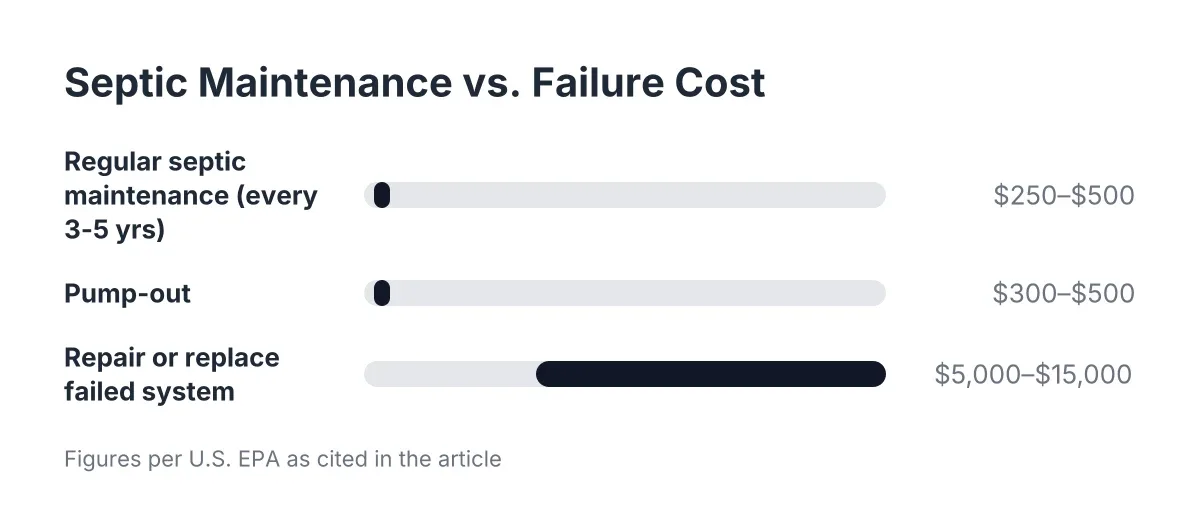
One number worth keeping in mind as you read: according to the U.S. Environmental Protection Agency, regular septic maintenance costs $250 to $500 every three to five years, while repairing or replacing a failed conventional system runs $5,000 to $15,000. The whole point of knowing these signs is staying on the cheap side of that gap.
The eight signs, in the order they usually show up:
- Slow drains in several fixtures
- Gurgling toilets and drains
- Sewage odor in the yard or house
- Soggy ground or standing water over the drain field
- Sewage backing up into low drains
- A septic alarm that stays on
- No pumping in years, or no record of it
- Repeated clogs, a higher water bill, or grease down the drain
Early Warning Signs Your Septic System Is Failing
1. Slow drains in more than one fixture
One slow drain is usually a plumbing clog. Slow drains in several fixtures at once, especially the lowest ones in the house, point to the septic system instead. When the tank fills with sludge or the line to the tank starts to block, everything downstream slows together.
Try this quick test: run the bathroom sink, then flush the toilet. If both drain slowly, or the shower drain burps when the washing machine empties, the problem is likely past your walls. That pattern is one of the earliest signs your septic system needs to be pumped, and it is the cheapest point to fix it. A pump-out and a look at the inlet baffle often solve it the same day.
2. Gurgling sounds from toilets and drains
Gurgling means air is fighting its way through water where it should flow freely. When a septic tank is getting full or the line is partially blocked, air gets trapped and pushes back up through your pipes. You hear it as a burble in the toilet after a flush or a glug from the tub drain when the sink empties.
Homeowners tend to shrug this one off because everything still technically works. Do not. Gurgling almost always shows up before a backup, sometimes weeks before. A septic system inspection at this stage costs a service call. Ignoring it until sewage comes up a floor drain costs a cleanup, a repair, and often ruined flooring.
3. Sewage odor in the yard or inside the house
Sewage smell in the yard, especially near the tank lids or over the drain field, means wastewater is reaching the surface or gases are escaping where they should not. Indoors, a rotten-egg smell near floor drains or in the basement can mean the tank is overfull and pushing gas back up the line.
Occasional faint odor near a vent pipe on a windy day is normal. A persistent smell you can trace to one spot in the yard is not. Walk the area over your tank and leach field once a month; your nose will catch trouble before your eyes do. If the smell is steady, schedule septic tank pumping and an inspection rather than waiting to see if it fades.
4. Wet, spongy ground or standing water over the drain field
Soggy soil or pooling water over the leach field when it has not rained is a serious sign. It means the drain field is not absorbing wastewater, either because the tank is sending it solids or because the soil bed itself is failing. Unusually green, fast-growing grass in a stripe over the field lines tells the same story; the grass is feeding on effluent that should be filtering deeper into the soil.
This one matters most because the drain field is the expensive half of the system. A typical residential septic system has two main parts, a tank that clarifies wastewater and a drain field that disperses the liquid into the ground, according to the US EPA. Tanks get pumped; drain fields get replaced. Catch this early, cut water use immediately, and get a leach field inspection before the soil bed clogs for good.
5. Sewage backing up into the lowest drains
Sewage backing up into a tub, shower, or floor drain is the sign everyone fears, and it means the system has run out of room. Wastewater always exits at the lowest opening, so the ground-floor bathroom or basement drain goes first. If you see gray or black water rising in a low fixture, stop using water in the house. Every flush and every load of laundry makes it worse.
At this point you need an emergency septic service, not a drain snake. Call a septic professional first; if the crew confirms the blockage is inside the house plumbing rather than the tank or line, then a plumber handles it. Homeowners searching for a plumbing emergency near me often get routed to a drain company that snakes the line, charges for it, and leaves the full tank untouched. Start with the septic side and you skip that middle step.
What should I do if my septic tank backs up?
If your septic tank backs up, stop all water use in the house immediately, keep people and pets away from any standing sewage, and call a local septic service to pump the tank and find the blockage. Do not run water to "flush it through," and do not pour chemical drain cleaner into a septic line; it kills the bacteria the tank needs and does nothing for a full tank.
While you wait for the crew, clear a path to your tank lids if you know where they are. On many properties the tank sits at least 10 feet from the house, which is the minimum separation most local regulations require, according to the Minnesota Pollution Control Agency. Knowing that lid location before an emergency saves real time when one hits.
6. A septic alarm that will not stop
If your system has a pump or an aerobic unit, the alarm exists for one reason: the pump tank is full and sewage could start backing toward the house if nothing changes. Silencing the buzzer does not fix anything. The alarm can mean a failed pump, a stuck float, a tripped breaker, or simple overload from heavy water use.
First, check the breaker and cut back on water. If the alarm stays on for more than a few hours, treat it as urgent and call for service. Landlords with rentals on aerobic systems should tell tenants exactly this: report the alarm the day it sounds. Suppose a duplex owner near Fontana has tenants who tape over a beeping alarm box for two weeks; in that scenario, a $150 float switch problem becomes a sewage backup, a habitability complaint, and a vacant unit during turnover.
7. The tank has not been pumped in years, or you do not know when
No visible symptom is still a sign if the history is blank. Most emergency backup calls trace back to one thing: a tank left unpumped far past its interval, letting sludge and scum build until solids push into the drain field. For an active family of four, pumping every two to three years is generally advisable, according to Penn State Extension. Smaller households can often stretch longer; a septic tank inspector can tell you where your tank actually stands.
For first-time buyers, this is the most common gap. If your home inspection said the tank "needs attention" or your realtor mentioned it has not been pumped in years, book a pump-out and septic system inspection now, while nothing is wrong. You get a baseline, a measured sludge level, and a realistic maintenance schedule instead of a guess. Tank size matters here too; San Bernardino County's capacity table requires a 1,000-gallon tank for a 3-bedroom home and 1,500 gallons for a 5-to-6 bedroom home, according to the San Bernardino County Department of Public Health, and a small tank on a full house fills faster.
8. Repeated clogs, high water bills, or grease going down the drain
Some signs your septic system is failing appear before visible problems in the yard. A toilet that runs constantly can waste as much as 200 gallons of water per day, according to the U.S. Environmental Protection Agency, and every gallon of it floods your tank and drain field. If your water bill jumped and your drains slowed in the same month, those two facts are probably connected.
Grease is the other quiet killer. The EPA's report to Congress found grease is the most common cause of reported sewer blockages, at 47 percent. In a septic tank it hardens into the scum layer and clogs baffles and lines. For landlords, this is a tenant-education line item: no grease down the kitchen sink, ever. For homes or units with heavy kitchen use, grease trap cleaning on a schedule beats an emergency call every time.
What happens if you ignore a failing septic system?
Ignoring a failing septic system leads to sewage backing up into the home, untreated wastewater surfacing in the yard, and eventually a drain field replacement that costs $5,000 to $15,000 per EPA figures, versus $250 to $500 for routine pumping. Failures build gradually, then break suddenly; the early signs are the cheap ones.
There is also a liability side. Surfacing sewage is a health hazard, and for rental properties it can draw a code enforcement notice and force tenants out mid-lease. A small landlord with four units on a shared system in the Fontana area has a stronger position with pump-out records on file than with a shrug when an inspector asks for them.
When the signs point to a professional, not a DIY fix
You can check a breaker, cut water use, and stop pouring grease down the sink on your own. You should not open a septic tank lid yourself; the gases inside can be deadly, and diagnosing sludge levels, baffles, and drain field condition takes equipment and training a homeowner does not have.
The honest trade-off: not every warning sign means disaster. Sometimes a slow drain is just a clog, and a good septic system inspection will tell you that instead of selling you a repair you do not need. Learn these eight signs, walk your yard once a month, keep a pumping record, and you will meet your septic system on your terms instead of at 2 a.m. with a wet floor.
If you need septic tank pumping, Fontana Septic can help.
Prefer to talk it through? Call (909) 316-2368 — a quick call is usually the fastest way to get a straight answer for your situation.