
Aerobic vs. Conventional Septic Systems: Which Fits Fontana Homes and Rentals
If you own rental homes around Fontana that sit on septic, you have probably heard both terms tossed around: aerobic and conventional septic systems. The comparison between aerobic vs conventional septic systems is one most articles skip over, jumping straight to a sales pitch for whichever system the writer installs. This one does the opposite. It walks through how each system works, what each one costs you in attention and upkeep, and which one makes sense for a Fontana home, a rental, or a new lot in the unincorporated county areas nearby.
Here is the short version up front. A conventional system is simple, gravity-fed, and cheap to maintain, but it needs soil that drains well. An aerobic system treats wastewater to a higher standard using a powered air pump, but it demands more maintenance and more money over its life. Which one you end up with is often decided by your soil and your county, not by your preference.
How a Conventional Septic System Works
A conventional septic system moves wastewater by gravity through a buried tank and into a drain field, with no motors and no electricity. According to the U.S. Environmental Protection Agency, a conventional system consists of two main components: the septic tank and the drain field. Bacteria in the tank break down waste without oxygen, which is why these are also called anaerobic systems.
Every drain in the house feeds one pipe that runs to the tank. Inside, solids settle to the bottom and grease floats to the top. Baffles at the inlet and outlet, shaped like downward-facing tees, keep solids from floating out with the liquid, a design the University of Nebraska-Lincoln Extension credits with making the whole system work better.
The clarified liquid then flows out through perforated pipes into the leach field, sometimes called a drain field. According to the U.S. Environmental Protection Agency, the wastewater filters through gravel or stone, then through sand and soil, which finish the treatment naturally. The solids stay behind in the tank until a septic pumper removes them during a routine pump-out.
That is the whole machine. No pump to fail in most setups, no air compressor, no timer, no alarm panel. When people search for septic system basics, this is the system they are usually asking about, because it is by far the most common type in the ground.
How an Aerobic Septic System Works
An aerobic septic system adds oxygen to the treatment process with a powered air pump, which lets a different class of bacteria break down waste faster and more completely. The result is cleaner water leaving the system. The trade-off is a system with moving parts, electrical components, and a real maintenance schedule.
A typical aerobic unit runs wastewater through stages. First, a trash or primary chamber catches solids, much like a conventional tank. Next, an aeration chamber bubbles air through the liquid so oxygen-loving bacteria can work. After that, a clarifier lets remaining particles settle, and a pump chamber pushes the treated water out to the field. Many modern units pack all of this into one precast concrete tank with internal compartments; older designs used separate tanks in a row, sometimes with a chlorination step before discharge.
Because the water leaving an aerobic unit is treated to a higher level, it can be dispersed in more ways. Some systems drip it slowly underground. Others spray it over a designated area. That flexibility is why counties sometimes require aerobic systems on tight lots, poor soils, or parcels near water where a standard drain field will not pass review.
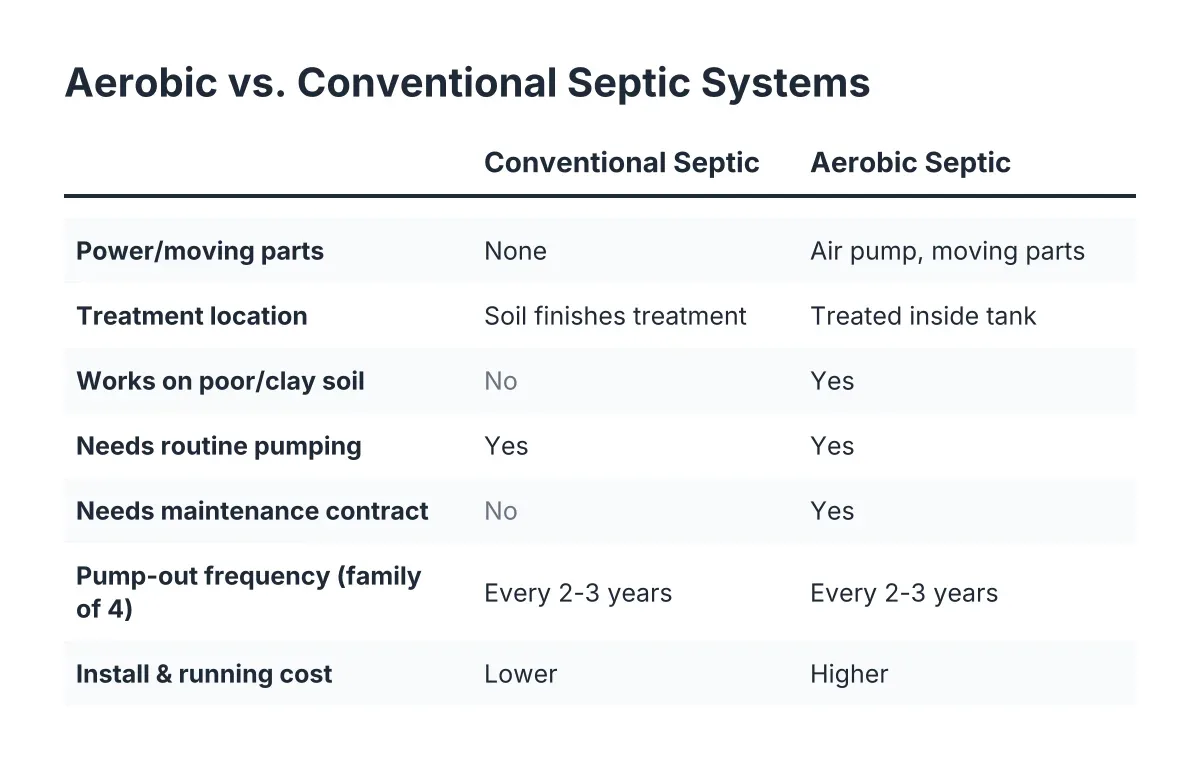
Aerobic vs. Conventional Septic Systems, Side by Side
The real differences between aerobic and conventional septic systems show up in four places: treatment level, maintenance, cost over time, and what your site allows. Here is how they stack up.
Treatment and Site Requirements
A conventional system leans on your soil to finish the job. Therefore, the lot has to pass a percolation test showing the ground absorbs water at an acceptable rate. If the soil drains well and the lot has room for a full leach field, a conventional system is usually permitted and usually the default.
An aerobic system does most of the treatment inside the tank, before the water ever touches soil. As a result, it can work on lots where a conventional drain field would fail: clay-heavy ground, small parcels, steep slopes, or sites near a water feature. For developers working unsewered parcels in areas like Sunnyslope, Glen Avon, or Jurupa Valley, the perc test result often makes this decision before anyone opens a catalog.
Maintenance Burden
This is where the two systems split hardest, and it matters most if you manage more than one property.
- A conventional system needs routine septic tank pumping and an occasional septic system inspection. Penn State Extension notes that an active family of four should pump every two to three years. Between pump-outs, a healthy conventional system mostly asks to be left alone.
- An aerobic system needs everything above, plus ongoing service on its mechanical parts. Air pumps fail and need replacement. Filters need cleaning. Spray or drip lines need checks. Many jurisdictions require a standing maintenance contract on aerobic units for exactly this reason.
For a landlord, that difference compounds. One aerobic system means one more alarm panel a tenant might ignore and one more electric component that can quit on a holiday weekend. Three aerobic systems across three rentals means three of each.
Cost Over the Life of the System
Conventional systems cost less to install and far less to keep running. According to the U.S. Environmental Protection Agency, regular septic maintenance runs about $250 to $500 every three to five years, while repairing or replacing a failed conventional system costs $5,000 to $15,000. That gap is the strongest argument for staying on a pumping schedule regardless of system type.
Aerobic systems carry higher install costs and higher recurring costs. A full service visit can involve pumping, pump replacement, line work, and filter cleaning, which together cost well more than a simple pump-out. As an illustrative estimate, budget for an annual service line item on an aerobic unit the way you would budget for HVAC service, not the way you would for a once-every-few-years pump-out.
Lifespan and Failure Modes
Both systems can last decades when maintained. However, they fail differently. A neglected conventional system usually fails at the leach field; solids escape the tank, clog the soil, and you see slow drains, backups, or soggy ground over the field. A neglected aerobic system usually fails at its machinery first; a dead air pump quietly turns it into a bad conventional system, and the untreated water can then wreck the dispersal field.
One point worth underlining: keeping a conventional gravity system well maintained is the cheapest insurance there is. A healthy conventional system that gets pumped on schedule can run for a long time, and that routine care helps you avoid the scenario where a destroyed drain field forces an upgrade to an aerobic system with all the maintenance that comes with it.
What Fontana and San Bernardino County Properties Usually Have
Most Fontana-area homes on septic have conventional, gravity-fed systems, which matches the pattern across the country. Aerobic units show up where soil or site conditions force the issue, more often on newer builds in unincorporated county parcels than on established Fontana lots.
Septic is the exception here, not the rule. According to the U.S. Environmental Protection Agency, California has one of the lowest rates of septic use among states, at about 10 percent. That means homes in sewered parts of Fontana connect to the municipal system, while homes just outside those boundaries, and plenty of older properties, run on septic. If you are buying a rental, confirm which one you have before close; a septic system inspection answers that in one visit.
Tank sizing is also set by the county, not by preference. The San Bernardino County Department of Public Health requires a minimum 1,000-gallon tank for a 3-bedroom home and 1,500 gallons for a 5-to-6 bedroom home. Developers filing permits in 2026 for unsewered lots should expect the county health review, including perc testing, to decide whether a conventional design gets approved or whether an engineered alternative is required.
Which System Fits a Rental Property Portfolio
For a landlord, the conventional system wins on predictability. Suppose you own three rental houses on septic, two in Fontana and one out toward Glen Avon. With conventional systems, your septic calendar is simple: a recurring pump-out every few years per property, plus an inspection when a tenant reports a slow drain or before a new lease. The costs are small, flat, and easy to document for accounting.
Now suppose one of those houses had an aerobic unit instead. In that scenario you would add an annual or semiannual service visit, a line item for eventual pump and compressor replacement, and a tenant briefing about the alarm panel, because an ignored alarm can mean a failed system and a habitability complaint. None of that is a reason to avoid a property with an aerobic system; it is a reason to price the carrying cost correctly before you buy.
Tenant habits matter either way. A single running toilet can waste as much as 200 gallons of water per day, according to the U.S. Environmental Protection Agency, and that extra load pushes solids out of any tank faster. Grease is the other quiet killer; an EPA report to Congress found grease is the most common cause of reported sewer blockages at 47 percent, and it does the same damage inside a septic tank. A one-paragraph septic addendum in your lease, covering grease, wipes, and harsh drain cleaners, costs nothing and prevents most tenant-caused backups.
How to Choose Between Aerobic and Conventional Septic Systems
For an existing home, you rarely choose; you inherit. The practical question is what you own and what shape it is in, which an inspection settles. For new construction or a replacement system, the decision comes down to a short checklist:
- Start with the perc test. If the soil passes, a conventional system is permitted, cheaper, and simpler. That ends the debate for most lots.
- If the soil fails, or the lot is small, steep, or near water, expect the county to require an aerobic or other engineered system. Fighting that requirement wastes permit time.
- If both are allowed, weigh lifetime cost against treatment needs. Conventional wins on maintenance cost; aerobic wins where cleaner discharge or a smaller footprint is worth paying for.
- Whichever you run, put pumping on a schedule. Pump-outs are the cheapest thing you will ever do for a septic system, and skipping them is how drain fields die.
A note on converting a conventional septic system to aerobic: it is possible, and sometimes it is the only path after a drain field fails on poor soil, but it is a significant project with permanent maintenance obligations. Get a professional evaluation of the tank and field before assuming conversion is necessary; often a repair or a new conventional field is the better answer. Local soil conditions, county rules, and the state of your existing field all change the math, so treat any general comparison, including this one, as a starting point rather than a verdict on your specific lot.
If you need septic tank pumping, Fontana Septic can help.
Prefer to talk it through? Call (909) 316-2368 — a quick call is usually the fastest way to get a straight answer for your situation.