
What Triggers a Septic Emergency? Warning Signs and What to Do Right Now
Toilets that won't flush, sewage smell in the yard, water pooling over the drain field. If any of that is happening at your Fontana home right now, you need to know what triggers septic emergency warning signs and which ones mean a crew should be on the way today. This guide walks through the warning signs step by step, tells you what to do in the next hour, and explains what a fair emergency call-out looks like, so a crisis price does not get tacked on just because you were in a bind.
Here is the short version: most septic emergencies come down to a full tank, a clogged line, or a failing leach field. Two of those three are fixable the same day. The steps below help you figure out which one you have and what to do about it before sewage reaches your floors.
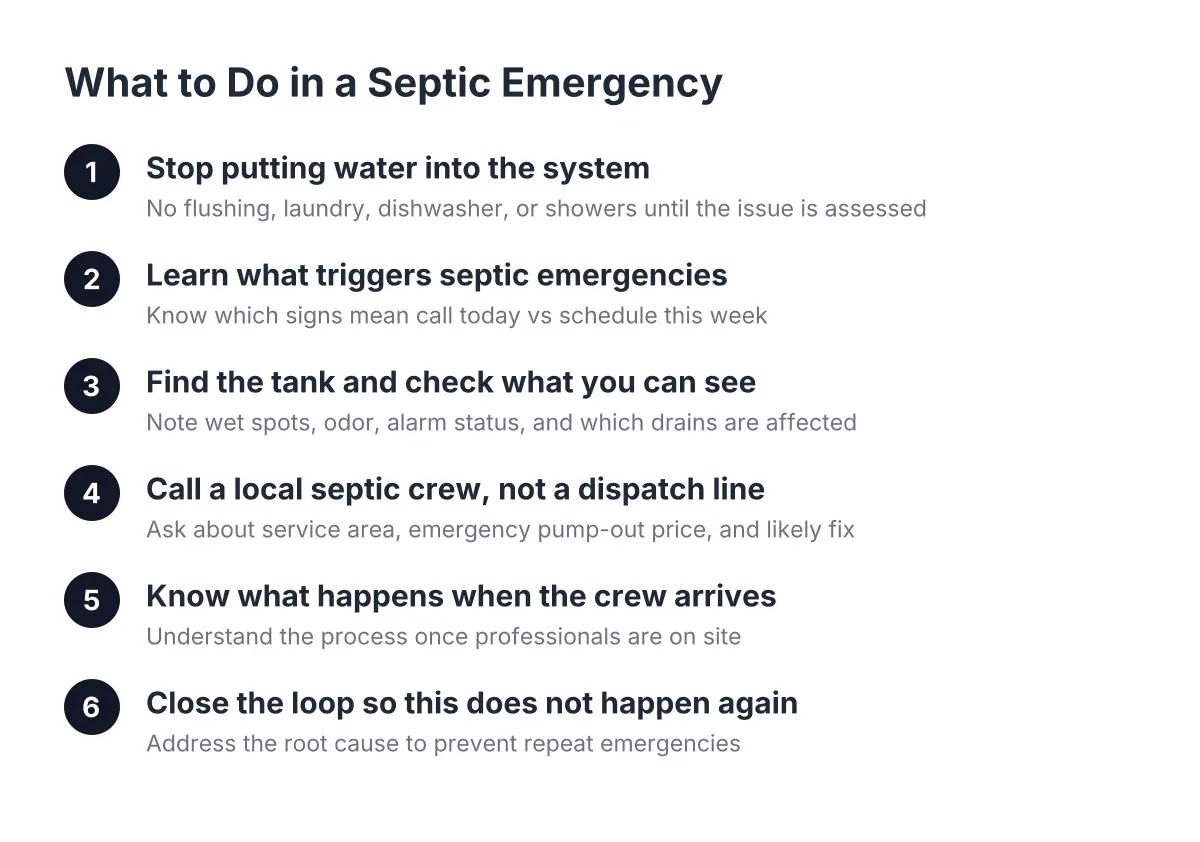
Step 1: Stop Putting Water Into the System
This is the single most useful thing you can do in the first five minutes. Every gallon that goes down a drain right now has nowhere to go except back up into your house or out onto your yard.
So stop everything:
- No flushing. Use a neighbor's bathroom or a bucket if you have to.
- No laundry, no dishwasher, no showers.
- Check for running toilets. According to the U.S. Environmental Protection Agency, a single leaky or running toilet can waste as much as 200 gallons of water per day, and every one of those gallons lands in your septic tank.
- Turn off any water softener or irrigation line that drains into the system.
A backup almost always gets worse with more water and better with less. Cutting the flow buys you hours, sometimes a full day, while you get help lined up.
Step 2: Learn What Triggers Septic Emergencies
Not every septic problem is an emergency. Knowing which signs mean "call today" and which mean "schedule this week" keeps you from panicking, and it keeps you from ignoring something serious.
What are the warning signs of a septic system emergency in Fontana?
A septic emergency in Fontana shows up as sewage backing up into tubs or floor drains, standing wastewater or strong sewage smell over the tank or leach field, multiple slow drains at once, or gurgling in the pipes when you flush. Any one of these means the tank or the line is at or past capacity and needs attention now.
Break it down by urgency:
Call today:
- Sewage backing up into the house, usually in the lowest drain first, like a tub or a shower.
- Wastewater surfacing in the yard, especially over the tank lid or the drain field.
- A septic alarm sounding on a pump or aerobic system. The alarm exists to give you a short window before backup starts. Use that window.
Call this week:
- One slow drain, one gurgle, or a faint odor outside that comes and goes. These are early triggers of a septic emergency; warning signs like these usually mean the tank is filling faster than the field can take it.
- Grass over the drain field that is greener and spongier than the rest of the lawn.
The difference matters because it changes who you call and what you pay. A single slow drain might be a simple drain cleaning visit. Sewage in the tub means an emergency pump-out.
Why do septic systems fail and what causes emergencies?
Septic systems fail for three main reasons: the tank is overdue for pumping, grease or solids have clogged the line between the house and the tank, or the leach field can no longer absorb water. Skipped pump-outs are the most common trigger. Grease is a close second; EPA's report to Congress found grease is the most common cause of reported sewer blockages, at 47 percent.
A full tank pushes solids into the leach field, and that is where cheap problems become expensive ones. According to the U.S. Environmental Protection Agency, regular maintenance runs $250 to $500 every three to five years, while repairing or replacing a failed conventional system runs $5,000 to $15,000. The gap between those two numbers is the whole argument for treating warning signs seriously.
Step 3: Find the Tank and Check What You Can See
You do not need to open anything. Just gather information a septic pumper will ask for on the phone.
Walk the yard and note where the tank lids are, if you know. Look for wet spots, odor, or settling soil. Check whether the backup is in every drain or just one. A whole-house backup points to the main line or the tank; one slow sink points to a local clog.
If you have a pump system with an alarm, note whether the light is red and whether the pump hums when it should run. Do not silence the alarm and walk away. The alarm going off is one of the clearest warning signs that a system gives you, and it usually means you have limited reserve capacity left in the tank.
One hard rule: never climb into or lean over an open septic tank. The gases inside can knock a person out in seconds. Leave lids to the crew.
Step 4: Call a Local Septic Crew, Not a Dispatch Line
When you search "septic tank emergency near me" or "emergency plumber near me" at 7 a.m. with a backed-up tub, the first results are often national directories and 24 hour plumbing service near me listings that route your call through a distant dispatcher. That dispatcher does not know Fontana soil, county rules, or whether the truck is 15 minutes away or 90.
Instead, call a local septic services company directly and ask three questions:
- Do you service my address in Fontana or the immediate surrounding area?
- What is the price for an emergency pump-out before anyone starts digging?
- Is this likely a pump-out fix or a bigger repair, based on what I described?
A straightforward local operator can answer all three on the phone. If the person taking your call cannot tell you what the visit costs or dodges the question until a tech is standing in your yard, keep dialing. Emergency septic service should come with a price you hear before the truck arrives, not after.
For context on capacity, San Bernardino County's minimum septic tank capacity table requires a 1,000-gallon tank for a 3-bedroom home and 1,500 gallons for a 5-6 bedroom home, according to the San Bernardino County Department of Public Health. Knowing your bedroom count helps the crew estimate tank size and pump-out scope before they roll.
Can I fix a septic emergency myself or do I need a professional?
You can reduce water use, clear a single fixture clog with a plunger, and locate your tank yourself. You cannot safely pump a tank, open lids, diagnose a leach field, or clear a main line without equipment and training. Backups involving raw sewage, surfacing wastewater, or a failed pump need a professional, both for safety and because county health rules apply to septic work.
Chemical "septic treatments" from the hardware store will not empty a full tank. At best they do nothing; at worst they push solids into the drain field and turn a pump-out into a field repair.
Step 5: Know What Happens When the Crew Arrives
Understanding the visit keeps you from being surprised by scope or price.
A typical emergency visit runs like this: the crew locates and opens the tank, measures the sludge and scum layers, and pumps the tank out. Then they check flow from the house and look at how the leach field takes water. In most backup calls, the pump-out restores flow the same day, and the crew tells you whether the field showed signs of trouble.
For example, suppose a homeowner in north Fontana wakes up to sewage in the hall bathroom tub the morning before family arrives. In that scenario, a typical crew would pump the tank, confirm the line to the house is clear, and have drains flowing again within a few hours of arrival. If the tank refills fast or the field stays soggy, that same visit becomes a septic system inspection instead, because pumping alone will not fix a saturated leach field.
That is the honest trade-off to know going in. An emergency pump-out solves a full tank; it does not solve a failed drain field. If your field is the problem, expect a follow-up leach field inspection and a repair conversation, and get that assessment in writing before agreeing to major work.
Step 6: Close the Loop So This Does Not Happen Again
Once drains are flowing, most homeowners want to forget the whole thing. Do two things first.
First, write down the pump-out date and set a reminder three years out. Septic systems are less common in California than most states, about 10 percent of homes per U.S. Environmental Protection Agency data, so neighbors and general handymen often give bad advice about intervals. A regular pump-out schedule is what prevents the 2 a.m. version of this problem.
Second, fix the habits that caused the backup. Keep grease out of the kitchen drain, fix running toilets, and spread laundry loads across the week instead of one Saturday marathon. If the crew flagged the leach field, schedule the inspection instead of waiting for the next round of warning signs; septic emergencies rarely announce themselves twice at a convenient hour.
Ignoring a failing system does not freeze the problem in place. Wastewater keeps flowing every day, and a struggling field gets worse under load, not better. Catching it at the slow-drain stage is a service call. Catching it at the sewage-in-the-yard stage in 2026 can mean a repair bill in the five figures, plus a county health conversation you did not want to have.
The bottom line: cut the water, read the signs, call someone local who names a price up front, and treat the pump-out date on your calendar as seriously as the alarm on your wall.
If you need septic tank pumping, Fontana Septic can help.
Prefer to talk it through? Call (909) 316-2368 — a quick call is usually the fastest way to get a straight answer for your situation.