
Septic Tank Backup Causes, Quick Fixes, and When to Call for Help
When sewage comes up the shower drain, you need two things fast: a way to slow the damage and a clear picture of what went wrong. This guide walks through the most common septic tank backup causes, the temporary steps that actually help, and the point where a Fontana homeowner should stop troubleshooting and get a septic pumper on-site. No crisis markup talk, no call-center runaround; just what a local crew would tell you over the phone before the truck rolls.
Here is the honest starting point. A backup is a symptom, not a diagnosis. The fix might be a straightforward pump-out that takes an hour, or it might point to a leach field problem that needs a real inspection. Knowing which septic tank backup causes are in play helps you avoid paying for the wrong fix under pressure.
1. Why a Full Tank Is the Most Common Reason for Backups
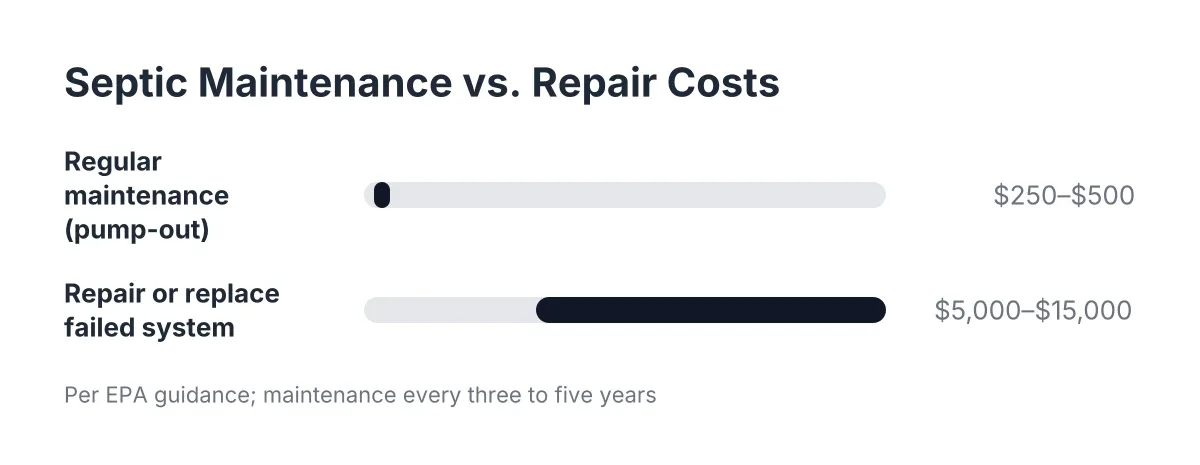
A septic tank that has not been pumped in years is the number one reason toilets stop flushing and drains gurgle. Solids build up, the tank runs out of working space, and wastewater has nowhere to go but back up the line. According to U.S. Environmental Protection Agency guidance, regular maintenance costs about $250 to $500 every three to five years, while repairing or replacing a failed conventional system runs $5,000 to $15,000.
If you cannot remember your last pump-out, treat that as your leading suspect. A tank sized for your home fills on a schedule you can predict. San Bernardino County's minimum capacity table calls for a 1,000-gallon tank on a 3-bedroom home, so a larger household on that same tank fills it faster than the "every five years" rule of thumb suggests.
2. Grease Is the Quiet Killer of Septic Lines
Fat, oil, and grease harden inside pipes and inside the tank itself, choking flow long before you see a backup. The U.S. Environmental Protection Agency's report to Congress found grease is the most common cause of reported sewer blockages, at 47%. Research published in the International Journal of Environmental Science and Technology estimates 30 to 40% of sewer clogs trace back to fat, oil, and grease deposits.
For landlords, this matters double. Suppose you own a duplex where both units drain cooking grease down the kitchen sink. The shared line clogs, both tenants call at once, and you are paying for a backup that a grease trap cleaning schedule would have prevented. Rentals on septic need house rules about grease, in writing.
3. Flushed Items That Should Have Gone in the Trash
Wipes, feminine products, paper towels, and dental floss do not break down in a septic tank. They mat together, clog the inlet baffle, and create backups that pumping alone sometimes cannot clear. "Flushable" wipes are one of the most common things a septic tank inspector finds tangled in a baffle.
However, this cause has a useful upside: it is the easiest one to rule out. If your household or your tenants flush nothing but waste and septic-safe paper, you can cross this off the list and look at the tank, the line, or the field instead.
4. A Clogged or Saturated Leach Field
When the drain field fails, the backup shows up as soggy grass, a sewage smell in the yard, and drains that slow down across the whole house at once. The leach field is where treated water soaks into the soil. If it is compacted, root-bound, or biologically clogged, water backs up into the tank and then into your home.
This is the cause you cannot fix with a plunger or a pump-out alone. A pump-out buys you a few days of relief, but the field fills the tank right back up. A leach field inspection tells you whether you are looking at a repair, a rest-and-recover plan, or a replacement conversation.
5. Heavy Rain and a Waterlogged Yard
Fontana does not get New Jersey levels of rain, but when a wet week hits, saturated soil around the drain field can push a marginal system over the edge. The soil cannot absorb more water, so the system backs up until the ground dries out. If your septic only acts up after storms, the field is telling you it has no reserve capacity left.
In addition, runoff matters. Downspouts, patio drainage, or irrigation aimed at the drain field area load the soil with water your septic system then has to compete with. Redirecting that water is one of the cheapest fixes on this list.
6. Too Much Water, Too Fast, From Inside the House
A septic system handles steady daily use, not a laundry marathon plus two showers plus a running toilet. According to the U.S. Environmental Protection Agency, a single leaky or running toilet can waste as much as 200 gallons of water per day. That is 200 extra gallons pushing through a tank and field sized for normal use.
For a small landlord with four units on a shared system, one running toilet in unit B can flood the field enough to back up unit D. As a result, water fixtures deserve a spot on your turnover checklist, right next to smoke detectors.
7. Roots, Crushed Pipes, and Old Infrastructure
Tree roots hunt for water and find it at pipe joints. Older clay or Orangeburg lines crack, sag, or collapse, and the backup that follows looks identical to a full tank from inside the house. Among septic system backup causes, this one is the hardest to spot without a camera or an inspection, because everything above ground looks fine.
Therefore, if you have pumped recently and the backup returned within weeks, suspect the line, not the tank. A septic system inspection with a look at the inlet and outlet can separate a pipe problem from a tank problem before anyone starts digging.
What Should I Do If My Septic Tank Backs Up?
If your septic tank backs up, stop all water use immediately, keep people away from any standing sewage, and call a local septic pumper to assess whether a pump-out or a repair is needed. Do not run laundry, showers, or dishwashers, and do not pour chemicals down the drain. Every gallon you send down makes the backup worse.
Here is the short list while you wait for help:
- Stop using water. Every flush and rinse adds to the backup.
- Keep kids and pets away from wet spots in the yard and any indoor sewage.
- Do not open the tank lid yourself. Septic gases are dangerous, and an open tank is a fall hazard.
- Skip the chemical drain openers. They will not fix a septic backup and can harm the tank's bacteria.
- Note what you saw first: which drain, what smell, and whether it followed rain or heavy use. That detail speeds up the diagnosis.
For example, say a Fontana homeowner wakes up to a slow drain in the hall bathroom on a Saturday, then finds sewage seeping near the tank lid by noon. In that scenario, shutting off water use and describing both symptoms on the phone lets a crew arrive knowing to check the tank level and the outlet to the field, not just snake a drain.
Can I Fix a Septic Backup Myself or Do I Need a Professional?
You can handle the water shutdown, a single slow drain, and simple prevention yourself, but an active sewage backup needs a professional with pumping equipment and inspection tools. Plunging one clogged toilet is a homeowner job. Sewage rising in multiple drains means the problem sits at the tank or beyond, past the reach of household tools.
The trade-off is real, though. Calling for a pump-out when the true problem is a collapsed line means you pay twice. That is why a straightforward crew checks the tank level before pumping; a tank that is not full points the diagnosis at the line or the field, and an honest operator says so before charging you for a pump-out you do not need. If the system involves the drain field, a shared multi-unit line, or any digging, get a professional evaluation before spending money on repairs.
Which Septic Tank Backup Causes Mean an Emergency Call?
Septic tank backup causes that demand same-day emergency septic service include sewage entering the house, sewage pooling in the yard, and a shared multi-unit system backing up into more than one home. Those situations create health risks and property damage that grow by the hour. A single slow drain with no smell can usually wait for a scheduled visit.
Use this rough triage:
- Call now: sewage in tubs, showers, or floor drains; standing sewage outdoors; a septic alarm plus backed-up fixtures.
- Call within a day or two: gurgling in multiple drains, a persistent sewage smell in the yard, or a backup that follows every laundry day.
- Schedule normally: routine pump-out reminders, pre-purchase inspections, or a single fixture that plunges clear and stays clear.
Landlords should treat any tenant report of sewage odor as a call-within-a-day item at minimum. Waiting invites a code enforcement notice, and in 2026 those carry deadlines you do not control.
The Bottom Line for Fontana Homeowners
Most backups trace to a handful of reasons for septic tank backup: a tank overdue for pumping, grease, flushed trash, a struggling leach field, excess water, or a damaged line. The first three are preventable with habits and a pump-out schedule. The last three need an inspection to diagnose and a plan to fix.
Whatever the cause, the pattern that protects you is the same. Stop the water, get a local set of eyes on the tank, and insist on knowing whether you are buying a pump-out or a repair before anyone starts. A backup is stressful; the diagnosis should not be a mystery, and the price should not be a surprise.
If you need septic tank pumping, Fontana Septic can help.
Prefer to talk it through? Call (909) 316-2368 — a quick call is usually the fastest way to get a straight answer for your situation.