
7 Signs Your Septic Tank Needs Pumping Now, Before a Backup Hits
If you own rental properties on septic, the signs your septic tank needs pumping usually show up in a tenant text message before they show up in your inbox. Understanding these septic signs at a rental property helps you stay ahead of emergencies. A slow drain here, a gurgling toilet there, and suddenly you are one weekend away from sewage in a rental unit and a habitability complaint. This list covers the seven warning signs that mean pump the tank now, plus how to build a schedule so you stop reacting to tenant calls and start planning ahead.
Every sign below is something a tenant can spot and report, which matters when you manage two, five, or ten units and cannot walk every property weekly. Learn these, teach them to your tenants, and you turn your renters into an early warning system instead of a source of surprise emergencies.
1. Slow Drains in More Than One Fixture
Slow drains across multiple fixtures are the most common early sign your septic tank is getting full. One slow sink is probably a hair clog. But when the tub, the kitchen sink, and a toilet all drain sluggishly at the same unit, the problem sits downstream of the fixtures, usually in the tank or the line feeding it.
For landlords, this distinction saves money. Tell tenants to report whether one drain is slow or several are. One drain means a simple drain service call. Several drains at once means schedule a pump-out before it becomes a backup. A tank left unpumped far past its interval lets sludge build until wastewater has nowhere to go but back up the line.
2. Gurgling Toilets and Drains
Gurgling is the sound of air fighting for space in a pipe that is not draining freely. When a toilet gurgles after a flush, or a sink burps when the washing machine drains, the tank or the line into it is likely restricted. Gurgling and slow drains together are typically the first warning that a tank needs pumping, and they show up days or weeks before an actual backup.
Therefore, treat gurgling as a scheduling trigger, not a curiosity. It is the cheapest point in the failure curve to act. Suppose a tenant in a Fontana duplex mentions the hall bathroom "makes noises" after showers. In that scenario, a pump-out visit in the $250 to $500 range beats an after-hours emergency call and a ruined bathroom floor by a wide margin.
3. Sewage Odor Inside the Unit or in the Yard
A working septic system should be invisible and odorless from the surface. A sewage smell near drains inside the unit, around the tank lids, or over the leach field means gases or effluent are escaping where they should not. Indoors, it often means the tank is full enough that gases push back up the drain lines. Outdoors, it can mean the tank is overfull or the drain field is struggling.
Odor complaints from tenants deserve a same-week look, not a note for next quarter. Smell is also the sign neighbors notice, and in San Bernardino County a persistent sewage odor can draw a code enforcement visit. That turns a maintenance item into a compliance problem with a deadline you do not control.
4. Wet Spots or Bright Green Grass Over the Drain Field
Soggy soil, standing water, or a stripe of unusually lush green grass over the drain field means effluent is surfacing instead of soaking into the soil. This is one of the clearer signs your septic tank is failing to keep solids out of the drain field, or that the field itself is clogging. Either way, wastewater is coming up instead of going down.
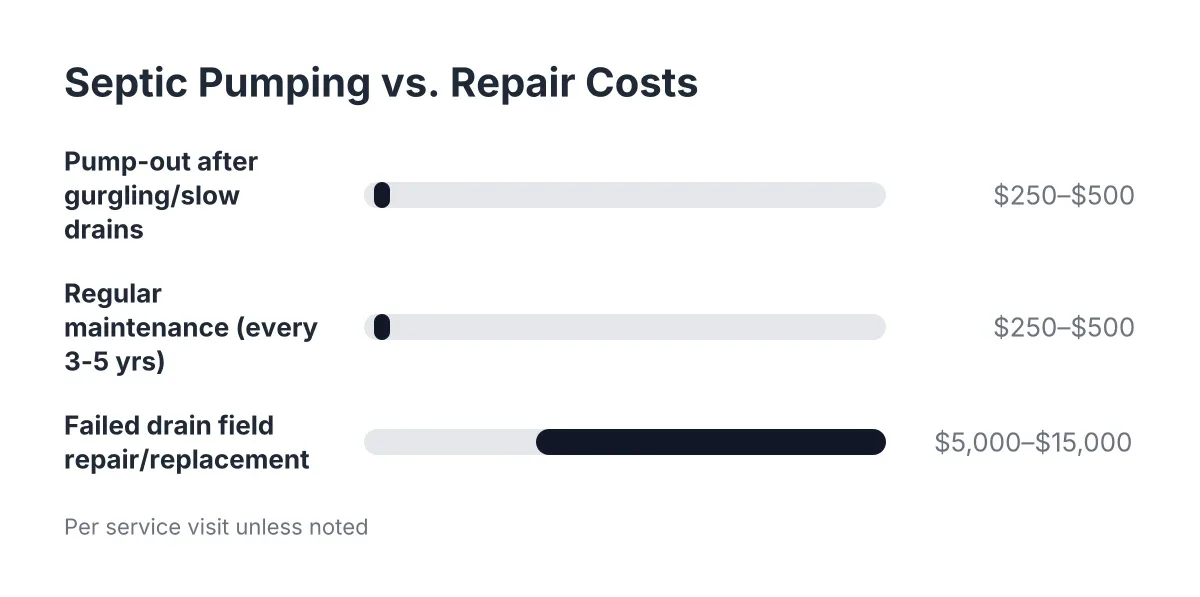
However, this sign carries a warning label. Pumping the tank buys time, but surfacing effluent often means the drain field needs its own inspection. According to the U.S. Environmental Protection Agency, regular maintenance runs $250 to $500 every three to five years, while repairing or replacing a failed conventional system runs $5,000 to $15,000. On a rental with thin margins, catching this sign early is the difference between a line item and a capital expense.
5. Sewage Backing Up Into Tubs or Floor Drains
Sewage backing up into the lowest fixtures in the unit is the last stop on this list, and the most expensive one. Wastewater follows gravity, so a backed-up system shows itself first in ground-floor tubs, showers, and floor drains. At this point the tank is full, the line is blocked, or both, and every flush upstairs makes it worse.
If a tenant reports black water in a tub, tell them to stop running water immediately and call your septic company for emergency service. Most emergency backup calls trace back to a tank left unpumped well past its interval, letting scum and sludge build until the system had no capacity left. A clogged inlet baffle is a common cause of septic backups, according to the Washington State Department of Health, and it is one of the first things a crew checks when troubleshooting a blocked line into the tank.
6. You Cannot Remember the Last Pump-Out
No symptom at all can still be a sign. If you bought a rental and the seller had no pumping records, or your own records for a property have gone quiet for four or five years, treat the calendar itself as the warning. Solids settle in the tank at every property, every day, whether anyone notices or not. Tanks must be pumped periodically regardless of how long you have gone without a problem.
For example, say you picked up a triplex in the Fontana area last year with no septic paperwork. The smart first move is a septic system inspection with a pump-out, so you know the tank size, the condition of the baffles, and the state of the leach field before a tenant complaint tells you the hard way. Skipping pumping for five years instead of the recommended interval can cause backups and drainage problems that linger even after the tank finally gets emptied.
7. High Water Use That Outpaces the Tank
A tank sized for a small household can be overwhelmed by a full house of tenants, and the signs show up as chronic slow drains that pumping only fixes for a few months. San Bernardino County's minimum capacity table requires a 1,000-gallon tank for a 3-bedroom home and 1,500 gallons for a 5 to 6 bedroom home, according to the San Bernardino County Department of Public Health. If a 1000 gallon septic tank now serves a unit with five occupants doing daily laundry, the pumping interval shortens.
In addition, watch for hidden water loads. A single leaky or running toilet can waste as much as 200 gallons of water per day, according to the U.S. Environmental Protection Agency, and every gallon of it runs through the septic tank. Fixing a $15 flapper valve at a rental can quietly extend the life of a $10,000 system.
How Often Should a Septic System Be Serviced at a Rental?
A rental property septic system should generally be pumped every two to three years when fully occupied, more often than the three-to-five-year interval quoted for average homes. Higher occupancy means more solids and more water. Penn State Extension advises pumping every two to three years for an active family of four, and a full rental unit behaves the same way.
Fewer than 10% of California homes sit on septic, according to U.S. Environmental Protection Agency data, so many tenants in Fontana and the surrounding area have never lived with one. They flush wipes, pour grease, and treat the toilet like a trash can, which shortens intervals further. Grease matters more than most landlords expect; research in the International Journal of Environmental Science and Technology estimates 30 to 40% of sewer clogs come from fat, oil, and grease deposits.
A workable 2026 schedule for a small portfolio looks like this:
- Pump each occupied unit every 2 to 3 years, and stagger the properties so the visits and costs spread across the calendar instead of landing in one quarter.
- Add a septic system inspection at every lease turnover, so problems get found during vacancy instead of during a tenancy.
- Give every tenant a one-page list: no wipes, no grease, no "flushable" anything, and report slow drains or gurgling right away.
- Keep the pump-out receipt and tank condition notes in each property's file for accounting and for any future sale or code question.
Can a Septic Tank Go 20 Years Without Pumping?
A septic tank cannot safely go 20 years without being pumped, even if no symptoms ever appeared. Solids do not stop accumulating just because the drains still work. What actually happens over that span is that sludge fills the tank, solids escape into the drain field, and the field clogs from the inside, which is the failure that costs five figures.
Lightly used tanks, such as a seasonal cabin, stretch intervals longer, but no residential tank earns two decades. The absence of symptoms is not the absence of buildup; visible signs only appear after the problem already exists. That is why scheduled pumping beats waiting for the septic signs a rental property owner receives when buildup is already significant.
Turn These Signs Into a System, Not a Scramble
The signs your septic tank gives you before a backup follow a rough order: gurgling and slow drains first, then odors, then wet ground, then sewage in the unit. Every step down that list gets more expensive and more disruptive to a tenant. The landlords who avoid emergencies are the ones who act on the first sign, not the fourth.
The stronger move is to stop relying on signs at all. Symptoms only show up after buildup has already started, so a recurring pump-out schedule with a local septic pumper who tracks your properties is the most reliable way to know when each tank needs service. Searching "cheapest septic tank pumping near me" every time a tenant complains puts you back at square one with each backup; one local company that knows your tanks, your intervals, and your records turns septic system maintenance into a line item you can predict.
One honest caveat: this list covers pumping needs, not every septic problem. Recurring wet spots over the drain field, sewage that returns soon after a pump-out, or an alarm on an aerobic system all point to issues that pumping alone will not fix. Those situations call for a professional septic system inspection, and possibly a leach field evaluation, before the next tenant moves in.
If you need septic tank pumping, Fontana Septic can help.
Prefer to talk it through? Call (909) 316-2368 — a quick call is usually the fastest way to get a straight answer for your situation.