
Local Septic Pumping Crew vs. Big-Box Plumbers: Why Fontana Landlords Choose Local
If you manage rental homes on septic in Fontana, CA, you have probably learned this the hard way: a national plumbing brand treats your septic tank as a side job. A local septic pumping crew treats it as the whole job. That difference shows up in how fast someone answers, how well they know the ground your tanks sit in, and whether the pump-out actually solves the problem or just buys you three months before the next tenant complaint. This guide walks through what separates a local crew from a big-box dispatch operation, what a proper pump-out includes, what maintenance costs look like, and how to set up a schedule that keeps your phone quiet. A septic crew for landlords like you understands these demands better than any national brand ever will.
Why the Choice of Septic Company Matters More for Landlords
A homeowner with one septic tank can absorb a slow response. A landlord with three rental houses on septic cannot. Every hour a backup sits unaddressed, a tenant gets angrier, and the risk of a habitability complaint grows. The company you hire is not just a vendor; it is the buffer between a slow drain and a formal dispute.
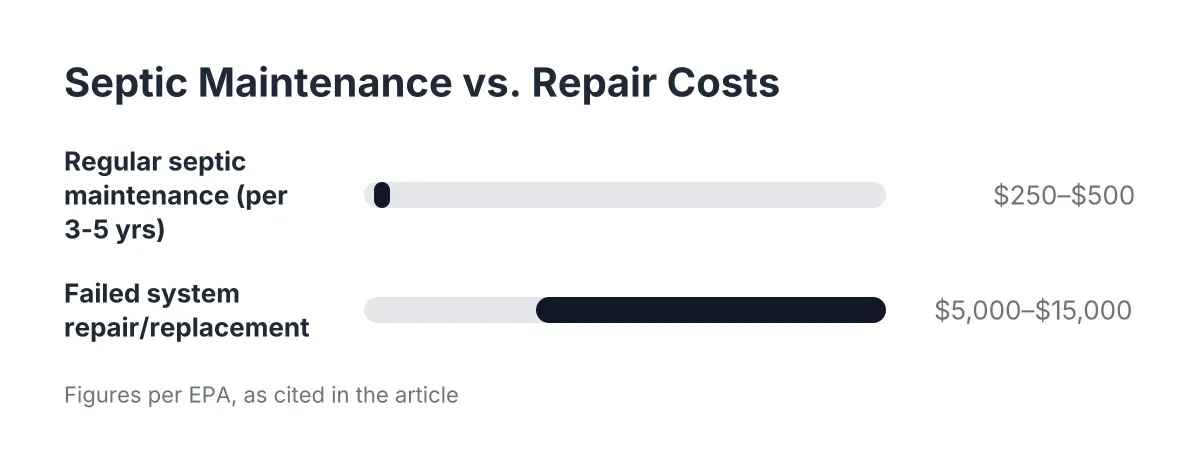
Here is where the numbers get serious. According to the U.S. Environmental Protection Agency, regular septic maintenance costs $250 to $500 every three to five years, while repairing or replacing a failed conventional system runs $5,000 to $15,000. Multiply that across a small portfolio and the math is blunt. Skipping pump-outs on three properties to save a few hundred dollars a year exposes you to five-figure repairs on any one of them.
Septic is also a minority situation in California. EPA data shows only about 10% of California homes rely on septic systems, compared to a high of 55% in Vermont. That matters for you as a buyer. Fewer septic homes means fewer companies that focus on septic work, and more general plumbing outfits that dabble in it. Choosing carefully is not optional here; it is the job.
What a Local Septic Pumping Crew Does Differently for Property Managers and Landlords
A local septic pumping crew based in Fontana works differently from a franchise brand in three ways: who answers the phone, who shows up, and what they know about the area.
First, the phone. When you call a national brand or a directory listing, your call often routes through a distant dispatch center. The person taking your call has never seen a leach field and cannot tell you whether your tenant's slow drain is a full tank, a clogged inlet baffle, or a drain field problem. A local operator can ask the right questions in the first two minutes and tell you what the visit will likely involve.
Second, the crew. Big-box outfits send whoever is available, and septic may be the fourth thing on that technician's list after drain cleaning calls. A dedicated septic pumper does tanks, leach fields, and grease traps all day. That focus matters because a proper pump-out is not just sucking out liquid. The settled sludge at the bottom and the floating scum layer on top are what cause backups, and removing them takes technique, not just a vacuum truck.
Third, local knowledge. San Bernardino County sets its own septic rules, including minimum tank sizes. The county's Department of Public Health requires a 1,000-gallon tank for a 3-bedroom home and 1,500 gallons for a 5-to-6 bedroom home. A crew that works these parcels every week knows the county's expectations, the local soil conditions, and the paperwork. An out-of-area technician learns all of that on your dime. For landlords managing multiple properties, having a septic crew that already knows the regional requirements saves time and prevents costly mistakes.
What Big-Box and Directory Options Get Wrong About Septic
Search for "septic tank pumping companies near me" or "drain cleaning companies near me" and you will find pages of directory listings and franchise brands. Many treat septic as an add-on to drain cleaning. The problem is that septic systems are biological, not just mechanical. The tank depends on bacteria breaking down waste, and the drain field depends on soil accepting water at a steady rate.
A drain-cleaning mindset looks for a clog to clear. A septic mindset asks why the clog happened: Is the tank overdue for a pump-out? Is the outlet filter blocked? Is the leach field saturated? Clearing the line without answering those questions means the same tenant calls you again in six weeks. That repeat call cycle is exactly what a recurring schedule with a local crew is built to prevent.
What a Proper Pump-Out Includes in Fontana, CA
When you book septic tank pumping in Fontana, CA, a complete visit should cover more than emptying the tank. Here is the scope of work a good provider delivers:
- Locating and opening the tank. If the lids are buried, expect some digging. Deep burial or hard access can add labor, and some companies bill it separately.
- Full removal of contents. Liquid, sludge, and scum all come out. A pump-out that leaves the sludge layer behind is an incomplete job, whatever the invoice says.
- A basic condition check. Baffles, the outlet filter if present, visible cracks, and liquid levels before and after. This is not a full septic system inspection, but a competent pumper flags obvious problems while the tank is open.
- Legal disposal. According to the New Hampshire Department of Environmental Services, waste pumped from residential tanks is trucked to a sewage treatment plant for disposal, not processed on site. A legitimate operator handles this as part of the service.
- Documentation. For a landlord, the receipt and service notes matter. They prove maintenance for accounting, for tenants, and for any future dispute about habitability.
What usually costs extra: digging to reach deeply buried lids, installing risers so future access is easier, hydro-jetting clogged lines, leach field inspection or repair, and any repair work found during the visit. Ask up front what the base price covers so the invoice matches the quote.
How Long Does a Septic Pump-Out Take?
A routine septic pump-out on an accessible tank generally takes under an hour of on-site work, though buried lids, a long hose run, or a heavily overloaded tank can stretch that. The bigger timing question for a landlord is scheduling: a routine pump-out can wait for a convenient window, but a backup at an occupied rental cannot.
This is where the local versus big-box difference shows again. A dispatch center slots you into a regional queue. A local septic pumping crew working only the Fontana area has shorter drives between jobs and a direct line to the person setting the schedule. No company can honestly promise a specific response time, but proximity and focus stack the odds in your favor.
How Often Should a Septic System Be Serviced?
A septic system should be pumped every three to five years for most households, with inspections in between. According to Penn State Extension, an active family of four generally needs pumping every two to three years because of higher solids and water use. Rental properties often run at family-of-four occupancy or higher, so landlords should plan on the shorter end.
Tank size and occupancy drive the interval together. A 1,000-gallon tank serving a full house fills with solids faster than the same tank serving a retired couple. If your rentals turn over tenants, treat each turnover as a checkpoint: new occupancy level, possibly new habits, possibly a new interval.
Can a Septic Tank Go 20 Years Without Being Pumped?
A septic tank cannot safely go 20 years without pumping under normal residential use. Solids build up regardless of how well the system seems to work, and once sludge reaches the outlet, it flows into the drain field and clogs the soil. Drain field damage is the failure that pushes repair costs toward the $5,000 to $15,000 range the EPA cites.
Some owners point to an old tank that "never had a problem." Usually that means the problem is building where no one can see it. The tank keeps accepting water right up until the drain field quits, and by then pumping alone will not fix it. For a landlord, betting a rental's habitability on that gamble is a losing trade.
What Does It Cost to Maintain a Septic System?
Maintaining a septic system costs a few hundred dollars every few years for pumping, per EPA guidance putting routine maintenance at $250 to $500 every three to five years. Spread over time, that is a small line item per property. The real cost driver is what maintenance prevents: drain field failure, emergency calls, and tenant turnover caused by repeated backups.
Local market conditions also shape pump-out pricing. Prices reflect how many pump trucks operate in an area relative to the number of septic-served homes, so quotes vary between regions and even between neighborhoods. As of 2026, the practical move for a Fontana landlord is to get a clear per-tank quote in writing, ask what triggers extra charges, and compare total documented cost rather than the headline number.
One honest trade-off: pumping is a competitive, low-margin service, so the cheapest quote can tempt you. However, a bargain pump-out that skips the sludge and scum removal, or skips the condition check, costs more over a portfolio than a thorough one. Judge the scope, not just the price.
Setting Up a Recurring Schedule Across Multiple Properties
For a landlord, the single highest-value move is turning septic from a reactive scramble into a calendar item. One company, one schedule, one set of records. Here is a simple structure that works across a small portfolio:
- Baseline every property. Get each tank pumped and inspected once so you know its size, condition, lid locations, and last-service date. You cannot schedule what you have not measured.
- Set intervals by occupancy and tank size. A 1,000-gallon tank with four tenants goes on a two-to-three-year cycle. A lightly occupied unit can stretch toward five years, confirmed by inspection.
- Stagger the properties. Put one property on the calendar each year instead of all three at once. Costs stay predictable, and no single year takes the full hit.
- Keep the paper. Save every invoice and service note per property. This is your maintenance record for accounting, and your evidence if a tenant dispute ever raises habitability.
- Brief your tenants. A one-page sheet on what not to flush, no grease down the drain, and who to call about slow drains prevents a large share of avoidable calls.
Suppose you own three rentals in the Fontana area, each on a 1,000-gallon tank with family occupancy. In that scenario, a staggered plan might mean one pump-out per year rotating across the properties, an illustrative outlay of a few hundred dollars annually, with an inspection added whenever a tenant reports a slow drain. Compare that to one drain field failure at $5,000 to $15,000 and the schedule pays for itself many times over.
Water habits belong in the plan too. According to the U.S. Environmental Protection Agency, a single running toilet can waste as much as 200 gallons of water per day, and every gallon of that flows through the septic tank into the drain field. Fixing a running toilet at a rental is septic maintenance, not just a water bill fix.
When to Call a Pro, and What You Can Handle Yourself
You can handle the low-risk items yourself or through your handyman: fixing running toilets and leaky faucets, spreading laundry loads across the week, keeping vehicles off the drain field, and telling tenants not to flush wipes or pour grease down the sink. Grease matters more than most people think; research published in the International Journal of Environmental Science and Technology estimates that 30-40% of sewer clogs come from fat, oil, and grease deposits.
Call a professional for anything involving the tank or the field. Opening a septic tank is dangerous work; the gases inside can be fatal, and the pumping itself requires a truck and legal disposal. Skip the additive products sold as pump-out substitutes. The system is a biological ecosystem, and regular pumping plus periodic professional inspection prevents problems more reliably than anything poured down a drain. Warning signs that mean call now rather than wait:
- Sewage backing up into tubs or floor drains
- Wet, soggy, or foul-smelling ground over the tank or leach field
- Multiple slow drains at once, especially at the lowest fixtures
- Gurgling in the plumbing after flushing or draining
One or two of these at a rental property is not a maintenance question anymore. It is an active problem, and delay converts it into a bigger one. Septic system maintenance done on schedule is what keeps these calls rare; when they happen anyway, you want a company that already knows your tanks.
A Note for Builders on Unsewered Parcels
Developers working lots in the unsewered pockets around Fontana face a different version of the same local-versus-distant question. New septic work runs through San Bernardino County requirements, and the sequence is fixed: a percolation test must be dug and performed before installation to confirm the soil drains properly, according to University of Nebraska-Lincoln Extension, and local health department inspection typically follows the perc test as part of the installation process, per the Caroline County Health Department.
Design details are regulated too. Most local regulations require at least 10 feet between a septic system and the building it serves, according to the Minnesota Pollution Control Agency, and county tank-size minimums apply per bedroom count. Septic installation is also a licensed specialty beyond pumping; the New Hampshire Department of Environmental Services notes that installers need additional certification covering soil types, percolation rates, and system design. For a builder on a permit timeline, a local septic contact who knows the county process is worth more than any national brand name.
Choosing Your Septic Company in Fontana: Three Questions to Ask
Before you commit a portfolio of properties to one company, ask three questions and listen for specific answers.
First, "What does your pump-out include?" The right answer covers full removal of sludge and scum, a look at baffles and filters, and legal disposal. A vague answer means a vague job.
Second, "Can you put my properties on a recurring schedule with reminders?" A company built for landlords will say yes without hesitation and explain how they track it. If they cannot manage a calendar, they cannot manage your portfolio.
Third, "Who answers when I call?" This is the local septic pumping crew test. If the answer is a person in Fontana who can pull up your service history and talk through the problem, you have found a working relationship. If the answer is a call center that opens a ticket, you have found a queue.
A fair quote is written, itemized per tank, and states what triggers extra charges such as digging, riser installation, or line clearing. It should not require a long-term contract to get a straight price.
For Fontana landlords ready to stop scrambling every time a tenant reports a slow drain, the next step is simple. Reach out to a local, Fontana-focused septic service, get each of your properties baselined with a pump-out and inspection, and ask to be put on a recurring schedule. One phone call to set it up beats a dozen emergency calls you never see coming.
If you need septic tank pumping, Fontana Septic can help.
Prefer to talk it through? Call (909) 316-2368 — a quick call is usually the fastest way to get a straight answer for your situation.