
Drain Cleaners and Septic Systems: Which Products Are Safe, Which Cause Damage
Type "drain cleaners septic systems" into a search bar and you get two kinds of pages: product ads and vague warnings. Neither helps when your tub is draining slow and you need to know, right now, whether that bottle under the sink will make things worse. This FAQ gives you the plain answer about septic safe drain cleaners. Your septic tank runs on live bacteria. Some drain cleaners kill them, some do not, and knowing which is which can save you a pump-out, or in a bad case, a drain field.
Can I use drain cleaners with a septic system?
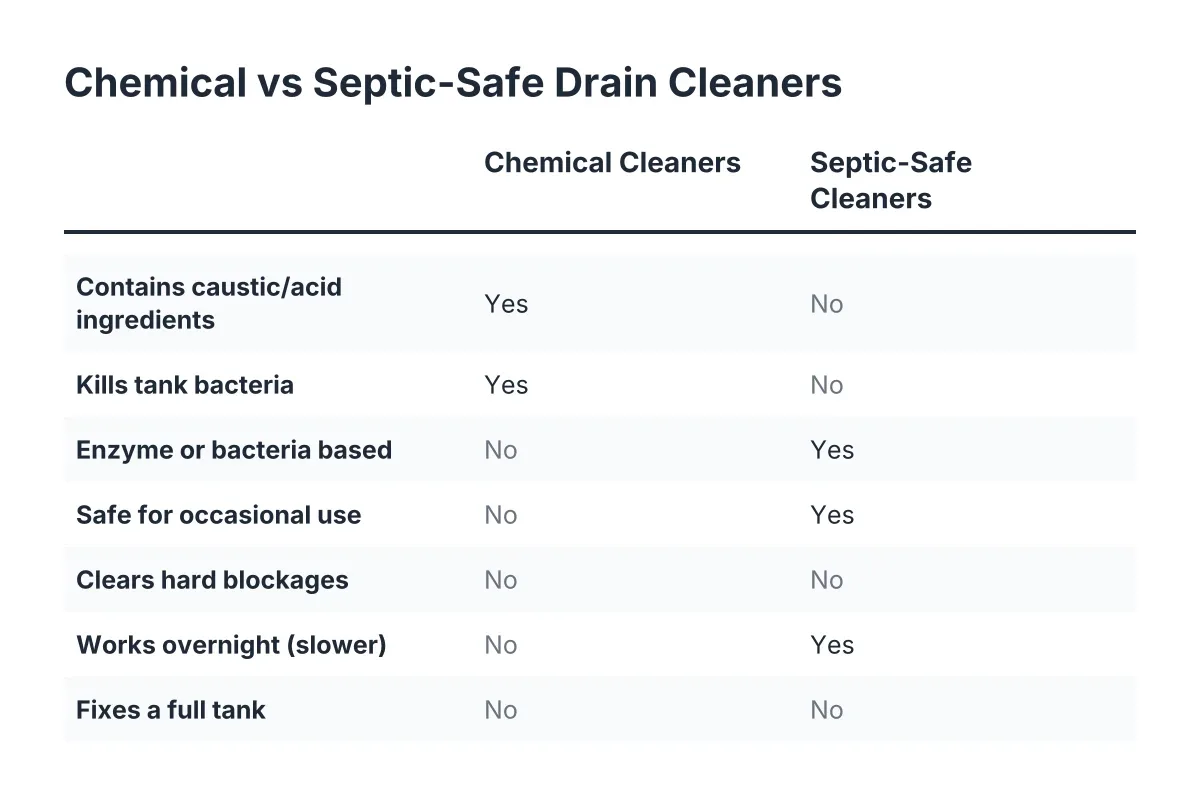
You can use some drain cleaners with a septic system, but not the harsh chemical kind. Caustic and acid-based cleaners kill the bacteria your tank needs to break down waste. Enzyme-based cleaners are generally safe for occasional use. For a fully blocked drain, mechanical clearing beats any chemical.
Here is why it matters. Your septic tank is a living system. Anaerobic bacteria inside it digest solids around the clock. Pour a heavy dose of chemical cleaner down the drain and you deliver a chemical shock to that colony. Kill enough bacteria and sludge builds faster, which means more frequent pump-outs and more strain on the leach field.
One bottle used once probably will not destroy the system. The damage comes from repeat use, or from dumping a large undiluted amount into a drain that feeds straight to the tank.
Which drain cleaners damage septic systems?
The drain cleaners most damaging to septic systems are caustic products (usually sodium hydroxide, also called lye) and acid-based products (often sulfuric acid). Both work by burning through clogs, and they burn through bacteria the same way. Oxidizing cleaners with high bleach content cause similar harm in large doses.
Watch for these red flags on the label:
- Sodium hydroxide or potassium hydroxide (caustic cleaners)
- Sulfuric or hydrochloric acid (acid cleaners)
- "Professional strength" or "maximum strength" chemical gels
- Warnings about burns, ventilation, or protective gloves
As a rough rule, if the label warns the product can burn your skin, it can harm the bacterial colony in your tank. These products also do nothing for the most common septic problem, which is a tank that is simply full and backing up.
What septic safe drain cleaners work best?
Septic-safe drain cleaners are enzyme-based or bacteria-based products that break down organic buildup without killing the tank's biology. They work slower than chemical cleaners, often overnight, but they clear soap scum, hair, and grease film without a chemical shock. Look for "septic safe" plus enzymes or bacteria listed on the label.
That said, keep expectations realistic. Enzyme cleaners maintain a slow drain; they rarely punch through a hard blockage. In addition, research from several university extension programs has found that commercial septic additives marketed to dissolve sludge lack strong scientific backing, according to Washington State University Extension. A septic-safe cleaner for a slow bathroom sink is fine. A monthly additive sold as a substitute for pumping is not.
For a stubborn clog, a drain snake or professional drain cleaning clears the line mechanically with zero risk to the tank. When safe drain cleaners and mechanical methods both have limits, the drain field and the tank itself need professional attention.
Will one use of chemical drain cleaner ruin my septic tank?
One moderate use of chemical drain cleaner will usually not ruin a septic tank. A healthy tank holds a large bacterial population that can recover from a single small dose. The real risk is habit, meaning a bottle every month, or a large undiluted pour straight down a main drain.
Dilution matters here. A cup of bleach spread through twenty gallons of laundry water is one thing. A quart of caustic gel sitting in a single drain line and flowing straight to the tank is another. The second one delivers a concentrated hit the bacteria cannot absorb.
Therefore, if you already poured chemical cleaner down the drain and the backup is getting worse, stop adding product. More chemical will not fix a full tank or a blocked line, and the extra load goes straight into the system.
My drains are backing up right now. Is it a clog or a full septic tank?
A single slow fixture usually means a local clog in that drain line. Multiple slow drains, gurgling toilets, sewage smell in the yard, or backup at the lowest drain in the house usually mean a full septic tank or a leach field problem. No bottle of drain cleaner fixes the second group.
Suppose a Fontana homeowner notices the master bath tub draining slow on Thursday, pours in chemical cleaner, and by Saturday both toilets gurgle and the yard smells like sewage. In that scenario the problem was never the tub line. The tank was full, the cleaner went into it, and the backup kept climbing. The right call was a pump-out, not another bottle.
A quick self-check before you spend money:
- Is it one fixture or several? One points to a clog; several point to the septic system.
- When was the last pump-out? Past three to five years means the tank is the prime suspect.
- Any smell or wet spots over the tank or drain field? That points past the pipes entirely.
- Does the backup start at the lowest drain first? That is classic full-tank behavior.
If you land on the septic side of that list, call a local septic pumper rather than pouring anything else down the drain.
What should never go down the drain on a septic system?
On a septic system, keep out harsh chemicals, grease, wipes, and anything that did not come out of your body or off your plate as liquid. Chemical drain cleaners, paint thinner, large amounts of bleach, and heavy antibacterial soap all attack tank bacteria. Grease and wipes clog lines and build sludge.
Grease deserves special mention. According to the U.S. Environmental Protection Agency, grease is the most common cause of reported sewer blockages, at 47 percent. It behaves the same way in a septic line, cooling into a solid plug. Wipes are the other repeat offender; even packages labeled septic safe do not break down the way toilet paper does.
This caution matters double for landlords. If you own a duplex or a small rental on a shared tank, you cannot control what every tenant pours down the sink. A one-page sheet at move-in, no grease, no wipes, no chemical drain cleaners, costs nothing and protects a system that several households depend on.
Is pumping better than drain cleaner for septic problems?
Pumping fixes the root cause when drains slow because the tank is full; drain cleaner only treats a symptom in one line. Regular septic tank pumping removes the settled solids that chemicals cannot touch. For most homes that means a pump-out every three to five years, sooner with heavy use.
The math backs this up. EPA guidance puts regular septic maintenance at $250 to $500 every three to five years, versus $5,000 to $15,000 to repair or replace a failed conventional system, according to the U.S. Environmental Protection Agency. No drain cleaner changes those numbers; skipping pump-outs does.
Fixing hidden water waste helps too. A single running toilet can push as much as 200 gallons of water per day into the system, per the U.S. Environmental Protection Agency, which floods the tank and carries solids toward the drain field.
Should I handle a septic drain problem myself or call a professional?
Handle the small stuff yourself: a plunger, a hand snake, or an enzyme cleaner on one slow fixture is reasonable DIY. Call a professional when multiple drains back up, when sewage surfaces in the yard, or when you do not know the last pump-out date. Those signs point to the tank or leach field, and guessing gets expensive.
Understanding septic system basics helps you make that call with confidence instead of panic. A conventional system has two main parts, the tank and the drain field, according to the U.S. Environmental Protection Agency, and problems in each look different at the fixtures. One honest limit on any article like this: no checklist can diagnose a buried tank from above ground. If symptoms point past a single drain, a septic system inspection or camera look at the line is the only way to know whether you need a pump-out, a repair, or just a cleared pipe.
As of 2026, the short version has not changed. Skip the caustic bottles, use enzyme products sparingly for maintenance, clear real clogs mechanically, and keep the tank on a pumping schedule. That routine costs less than any emergency, and it keeps the bacteria doing the work they were put there to do.
If you need septic tank pumping, Fontana Septic can help.
Prefer to talk it through? Call (909) 316-2368 — a quick call is usually the fastest way to get a straight answer for your situation.