
Septic Pumping Schedule for Fontana Homes: Intervals by Tank Size, Type, and Household
If your toilets are gurgling or you caught a sewage smell in the yard this morning, the question of how often should you pump a septic tank stopped being theory and became today's problem. Here is the straight answer up front: most homes need a pump-out every three to five years, but that range moves based on tank size, household size, and how the system gets used. Understanding the right septic pumping schedule for your home protects both your system and your wallet. This guide walks through the real schedule, the signs you have waited too long, and the honest line between a pumping problem and a repair problem. We fix what is broken. We do not push a full system replacement when a $400 pump-out and a small repair will do the job.
How Often Should You Pump Your Septic Tank?
Most households should pump their septic tank every three to five years. A smaller tank, a bigger family, or a garbage disposal pushes you toward the short end of that range. A large tank serving one or two people can sometimes stretch past five years, but only if an inspection confirms the sludge layer is still low.
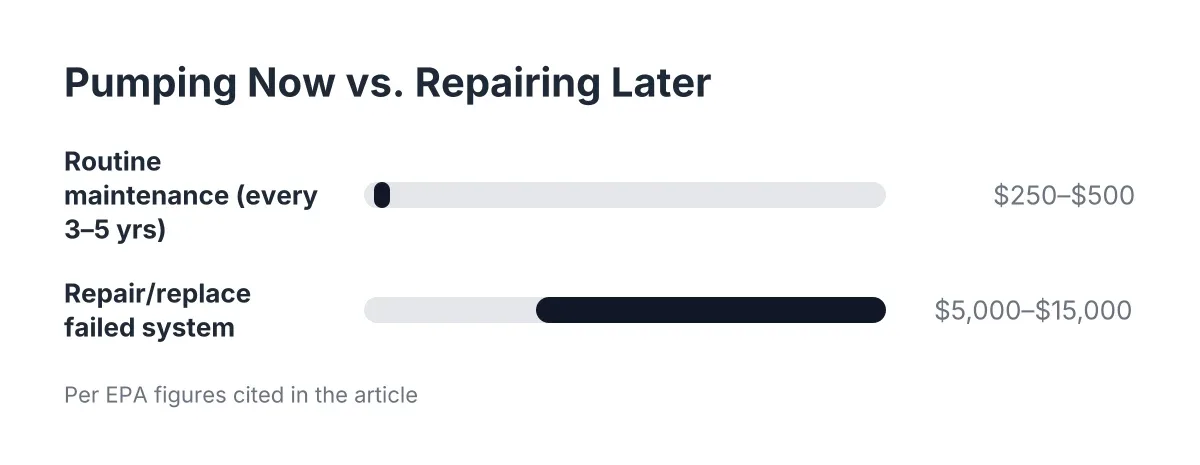
The three-to-five-year figure is not a marketing number. The U.S. Environmental Protection Agency puts routine septic maintenance at $250 to $500 every three to five years, compared with $5,000 to $15,000 to repair or replace a failed conventional system. That gap is the whole argument for a schedule. Pumping on time is cheap. Skipping it is not.
Here in the Fontana area, tank sizing follows county rules. San Bernardino County Department of Public Health requires a minimum 1,000-gallon tank for a 3-bedroom home and 1,500 gallons for a 5-to-6-bedroom home. If you know your bedroom count, you can guess your tank size within reason. What you often cannot guess is how full it is, which is why the first pump-out on a house you just bought should come with a septic system inspection.
What Changes Your Septic Pumping Schedule
Four things drive the schedule more than anything else:
- Tank size. A 1,000-gallon tank fills faster than a 1,500-gallon tank under the same load.
- People in the house. Every person adds wastewater and solids. A family of six on a 1,000-gallon tank may need pumping every two to three years.
- Water habits. Long showers, back-to-back laundry days, and leaks all add load. According to the U.S. Environmental Protection Agency, a single running toilet can waste as much as 200 gallons of water per day, and every gallon of it runs through your tank and out to your leach field.
- What goes down the drain. Garbage disposals, grease, wipes, and heavy cleaner use fill the sludge layer faster and can shorten the interval by a year or more.
For example, a retired couple in north Fontana with a 1,500-gallon tank might go five or six years between pump-outs without trouble. A rental duplex in Rialto with five tenants sharing one 1,000-gallon tank might need service every two years. Same county, same rules, different clocks.
Why the Pumping Schedule Matters More Here Than You Think
Septic systems are less common in California than most people assume. EPA data shows about 10% of California homes use septic, compared with a high of 55% in Vermont. That matters for a practical reason: fewer local homes on septic means fewer neighbors who can tell you what normal looks like, and more homeowners who inherit a tank with no service records and no idea when it was last pumped.
That is the situation we see most often on emergency calls. Nobody plans to learn about their septic system at 9 p.m. on a Saturday. The homeowner bought the house three or four years ago, the seller said the tank was "recently serviced," and now the shower drain is backing up before a houseful of guests arrives. The tank was probably last pumped years before the sale.
Therefore, if you do not know when your tank was last pumped, treat that as your answer. Schedule a pump-out and inspection now, get a baseline reading on the sludge and scum layers, and start the clock from a known date. That single visit turns your septic system from a mystery into a maintenance item.
Signs You Waited Too Long to Pump
A septic tank that needed pumping months ago announces itself through the drains, the yard, and the nose. Slow drains throughout the house, gurgling toilets, sewage odor near the tank or drain field, and wet or unusually green patches over the leach field are the four classic warnings. Any one of them means stop guessing and get the tank checked.
Watch for these in order of urgency:
- Slow drains in more than one fixture. One slow sink is usually a clog. Slow drains everywhere point to the tank or the line to it.
- Gurgling sounds when the washing machine drains or a toilet flushes. Air is fighting wastewater for space in the line.
- Sewage smell in the yard, especially near the tank lid or over the drain field. Effluent is surfacing where it should not.
- Soggy ground or lush grass stripes over the leach field during dry weather. The soil is taking on more water than it can absorb.
- Sewage backing up into the house. This is the emergency stage. Stop running water immediately and call a septic pumper, because every flush now ends up on your floor.
However, these same symptoms can also point past the tank to the leach field or a broken line. A full tank and a failing drain field look identical from inside the bathroom. That is why a pump-out on a struggling system should include a look at what the tank reveals once it is empty, such as backflow from the outlet, a damaged baffle, or roots in the inlet.
Pumping Problem or Repair Problem? How to Tell
A full tank is fixed by pumping. A damaged system needs septic system repair, and the difference usually shows within a day or two of the pump-out. If drains run fine after pumping and stay fine, the tank was simply full. If symptoms return within days or weeks, something downstream or structural is wrong.
Here is the honest breakdown of what points where:
- Fixed by pumping: slow drains that clear after service, a tank that had not been pumped in five-plus years, odor that disappears once the tank is emptied.
- Points to repair: effluent flowing back into the tank from the outlet pipe, standing water over the drain field that does not dry out, a cracked or collapsed baffle, roots inside the tank, or backups that return within a month of a pump-out.
- Points to the leach field: the tank level rises fast after pumping even with normal water use, or the ground over the field stays wet. Leach field inspection and repair is its own job, and it ranges from fixing a crushed distribution line to rejuvenating or replacing field sections.
This is where a straightforward crew earns its keep. A company that only sells replacements will look at a soggy yard and quote you a new system. Often the real fix is smaller: a broken outlet baffle, a crushed section of pipe between tank and field, or a tank that went eight years without a pump-out and pushed solids into the field lines. Those are repairs, not replacements, and the price difference is measured in thousands.
There is a limit to honest optimism, though. A drain field that has fully failed after decades of service, or a steel tank that has rusted through, cannot be repaired back to health. In those cases replacement is the right call, and pretending otherwise just delays the inevitable at your expense. A proper septic system inspection tells you which side of that line you are on before anyone starts digging.
What a Pump-Out Visit Should Include
A real pump-out is more than sticking a hose in the tank. When the truck leaves, you should know the condition of your system, not just that the tank is empty. A thorough visit covers the tank, the baffles, and the first read on the drain field.
Expect the crew to:
- Locate and uncover the tank lid, or both lids on a two-compartment tank
- Measure or note the sludge and scum layers before pumping, since that tells you whether your interval is right
- Pump the tank fully, including breaking up and removing the sludge layer, not just skimming liquid
- Check the inlet and outlet baffles for damage or blockage
- Watch for backflow from the outlet line, which flags a saturated leach field
- Tell you plainly what they saw and when to schedule the next pump-out
That last point is the one that answers the schedule question for your specific house. If the crew pumps your tank and finds it was only two-thirds of the way to needing service, you can stretch the next interval. If it was overfull and solids were near the outlet, tighten it. How often you should pump stops being a rule of thumb and becomes a number based on your own tank.
How Much Is It to Pump a Septic Tank?
A routine septic tank pump-out generally runs in the $250 to $500 range, which matches the EPA's figure for regular maintenance every three to five years. The price moves with tank size, how deep the lid is buried, how far the truck can park from the tank, and whether the visit is scheduled or an emergency.
Emergency calls cost more, and that is the part that stings homeowners who waited. A scheduled pump-out on a Tuesday morning is the cheapest septic service you will ever buy. The same tank pumped on a Sunday night while sewage creeps toward the hallway costs more and comes with cleanup on top. The schedule is not just about protecting the system. It is about never paying emergency rates for a predictable event.
If the visit uncovers a repair, ask for the diagnosis and the price before any digging starts. You are entitled to know whether you are looking at a $300 baffle fix or a five-figure drain field problem, and a local operator should be able to explain the difference in plain terms standing over the open tank.
Septic Tank Types, and How Often Each Should Be Pumped
Conventional gravity systems, pump-assisted systems, and aerobic treatment units all need pumping, but their schedules and warning signs differ. Knowing which septic tank type you have tells you what to watch and how tight to keep the interval.
Conventional gravity systems are the most common around Fontana. Wastewater flows from house to tank to leach field with no moving parts. The three-to-five-year pumping rule applies directly. Their failure mode is quiet: sludge builds until solids escape to the drain field, and by the time you notice, the field is taking damage.
Pump-assisted systems add a pump chamber that lifts effluent to a field sitting uphill or far from the tank. These need the same tank pumping, plus attention to the pump and float switches. When the pump fails, backups happen fast because gravity is not there to help.
Aerobic treatment units use air to break down waste and usually carry an alarm panel. If your septic alarm is going off, common causes include a failed aerator, a stuck float, high water level after heavy use, or a tripped breaker. An alarm is a warning, not yet an emergency; cut back water use and get it inspected before it becomes one. Aerobic units often need more frequent checks than conventional tanks, though pumping intervals still land in a similar range.
One more distinction worth knowing when comparing a septic tank vs cesspool: a cesspool is a buried pit that both holds waste and leaches it into the surrounding soil, with no separate treatment tank or drain field. Cesspools fill and fail faster, need more frequent pumping, and in most areas cannot be newly installed. If your older property runs on a cesspool, expect a shorter service interval and plan for eventual conversion to a proper septic system.
A Pumping Schedule for Landlords With Multiple Units
Rental properties on septic need a tighter, calendar-driven pumping schedule because tenants will not watch the warning signs for you. For a small landlord with duplexes or a mobile home lot in the Fontana area, the working rule is: pump on a fixed schedule, inspect at every turnover, and never let a shared tank go past three years unverified.
Tenant use is harder on a system than owner use. Nobody rinses grease more carefully because the landlord asked, and a running toilet in a rental can dump water into the tank for months before anyone reports it. In addition, a shared 1,000-gallon tank serving two units carries double the load of the single-family home it was likely sized for.
The math favors the schedule. A pump-out per building every two to three years is a few hundred dollars of planned expense. A backup into a tenant's unit means an emergency call, possible flooring damage, an unhappy tenant, and in the worst case a code enforcement notice and vacancy loss during repairs. Landlords who put pumping on a recurring calendar, the same way they handle HVAC filters, take the emergency scenario off the table almost entirely.
Grease deserves a separate mention for anyone with a commercial tenant or shared kitchen. Grease is the fastest way to shorten a pumping interval, and at commercial scale the volumes get serious; the U.S. Environmental Protection Agency notes a single restaurant can discharge between 800 and 17,000 pounds of grease annually without proper management. If a property has a grease trap, cleaning it on schedule protects the septic system behind it.
Your Pumping Schedule, in One Page
Pulling it together, here is the working schedule for 2026 and beyond:
- Unknown history: pump and inspect now, then set the clock from that date.
- Typical family home, 1,000-gallon tank: every three years.
- Large tank, small household: every four to five years, confirmed by sludge readings at each pump-out.
- Garbage disposal, big household, or rental units: every two to three years.
- Cesspool or aging system: shorter intervals, and get a professional read on remaining life.
- Any backup, yard odor, or alarm: service now, schedule later.
How often should you pump, then? Every three to five years is the honest default, adjusted by what your own tank shows at each visit. The homeowners who never meet us on an emergency call are the ones who treat pumping like an oil change: boring, scheduled, and cheap compared to the alternative. The ones mopping a hallway at midnight are usually the ones who let the question wait one year too long.
If you need septic tank pumping, Fontana Septic can help.
Prefer to talk it through? Call (909) 316-2368 — a quick call is usually the fastest way to get a straight answer for your situation.