
8 Signs Your Septic Tank Needs Pumping or an Inspection Right Now
If you just bought your first home on septic, understanding the septic tank warning signs is essential. The system sits underground and works quietly until it does not. This list covers the eight warning signs that mean you should schedule a pump-out or a septic system inspection now, not next season. It also explains what each sign usually means, so you can call a local septic pumper with a clear picture instead of a vague worry.
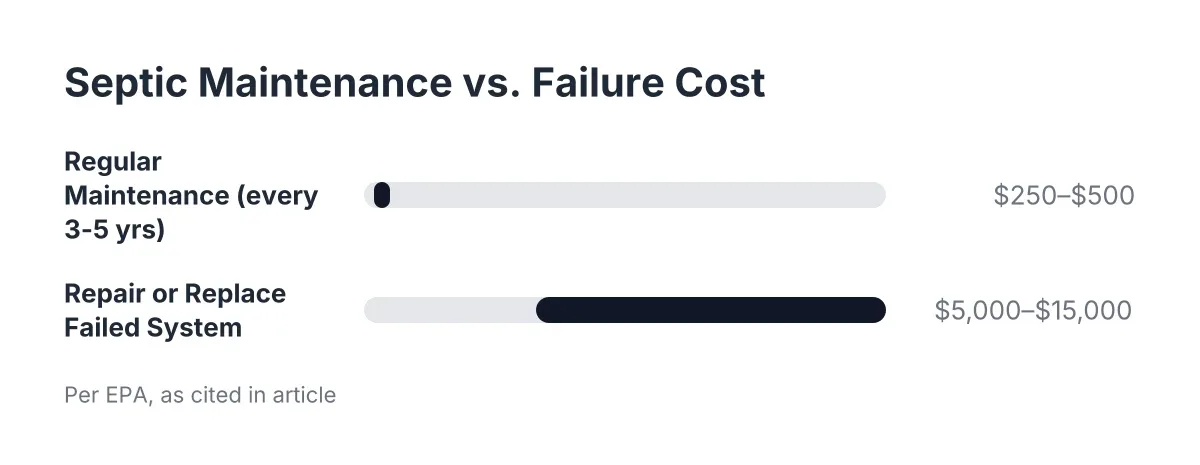
One thing up front: most septic problems start small and get expensive slowly. According to the U.S. Environmental Protection Agency, regular maintenance runs $250 to $500 every three to five years, while repairing or replacing a failed conventional system costs $5,000 to $15,000. Catching the signs early is the whole game. A crew that fixes what is broken, instead of pushing a full replacement, starts by reading these same signs.
1. Slow Drains Throughout the House
One slow drain usually means a clog in that fixture's line. Slow drains in every sink, tub, and toilet at the same time usually mean trouble at the tank or in the main line to it. The whole house shares that path, so a full tank or a blocked line drags everything down together.
Before you call, run a quick check. Flush the toilet farthest from the tank and watch how the nearest tub drains. If both struggle, the problem is downstream of your fixtures. In Fontana, that is often a tank overdue for a pump-out rather than a broken system.
2. Gurgling Toilets and Drains
Gurgling is the sound of air fighting its way past a blockage or a tank with no room left. It typically shows up before a full backup, which makes it one of the most useful early warnings you will get. Many homeowners hear it after laundry day, when a large volume of water hits the system at once.
Do not wait for the gurgle to turn into a backup. A clogged inlet baffle is a common cause of septic backups, according to the Washington State Department of Health, and it should be one of the first things checked when a line into the tank blocks up. A septic tank inspector can confirm whether the baffle, the tank level, or the line is the issue.
3. Sewage Backing Up Into the Home
A backup into a tub, floor drain, or toilet is the clearest emergency sign on this list. Wastewater has nowhere to go, so it reverses course into the lowest fixtures in the house. Stop running water immediately; every flush and every load of laundry adds to the problem.
In most cases, a backup with a thick scum layer sitting at the inlet means the tank is full and needs pumping. Sometimes the fix is that simple. Other times the backup points to a drain field problem, which is why a crew should look at the whole system before quoting anything bigger than a pump-out.
Septic Tank Warning Signs in the Yard: 4. Sewage Odor in the Yard or House
A healthy septic system does not smell. A sewage odor near the tank lids, over the drain field, or inside the house means wastewater is escaping somewhere it should not. Outdoors, it often signals a tank at capacity or a leach field that is not absorbing water. Indoors, it can mean a backup is starting or a vent problem.
Pay attention to when the smell shows up. An odor only after heavy water use points toward an overloaded tank. A constant smell over one patch of yard points toward the drain field. Either way, this is an inspection call, not a wait-and-see situation.
5. Wet Soil or Pooling Water Over the Tank or Drain Field
Soggy ground over the septic area on a dry week is one of the signs your septic tank or leach field is failing to handle the load. A conventional system has two main parts, the septic tank and the drain field, according to the U.S. Environmental Protection Agency. When either one is overwhelmed, effluent rises to the surface instead of soaking down through the soil.
Here is the honest part. Pooling water does not automatically mean a dead drain field. Sometimes a pump-out and a repair to a crushed line or a failed baffle restores normal function. A leach field inspection tells you which situation you have before anyone talks replacement.
6. Bright Green Grass in One Stripe of the Yard
A strip of grass that stays greener and grows faster than the rest of the lawn often sits right over a leaking tank or a saturated drain field. The grass is feeding on effluent. Fontana's dry climate makes this sign easy to spot; most of the yard browns out in summer while the leak line stays lush.
For example, say a first-time buyer in Fontana notices a green stripe in August, two months after closing on a house where the seller never produced pumping records. In that scenario, the smart first move is a pump-out combined with an inspection, since the two cost close to the same when done in one visit. The crew pumps the tank, checks the baffles and tank walls, and runs a flow test on the drain field before anyone guesses at a repair.
7. It Has Been Years Since the Last Pump-Out, or You Have No Records
No symptoms does not mean no problem. Solids build up in the tank whether or not anything backs up, and long gaps between pump-outs are how small issues turn into a drain field failure. Penn State Extension advises pumping every two to three years for an active family of four because of the higher solids load.
This sign hits two groups hardest:
- First-time buyers whose home inspection flagged the tank, or whose realtor mentioned it has not been pumped in years. Skipping a real septic inspection before or right after buying is how people end up surprised by a tank or field problem the seller never disclosed.
- Small landlords with duplexes or multi-unit properties on shared systems. More units means more water and more solids, so the pumping interval shrinks. A tenant complaint about a slow drain is usually a late sign, not an early one.
If you cannot name the date of the last pump-out, schedule one. In 2026, that visit is still the cheapest insurance a septic owner can buy.
8. High Water Use With No Explanation
A septic system sized for your house can still drown under extra water. According to the U.S. Environmental Protection Agency, a single leaky or running toilet can waste as much as 200 gallons of water per day, and all of it lands in your tank. San Bernardino County sizes tanks by bedroom count, 1,000 gallons for a 3-bedroom home up to 1,500 gallons for 5 to 6 bedrooms, according to the San Bernardino County Department of Public Health. A hidden leak can push even a correctly sized tank past what it handles.
Therefore, if your water bill jumps and your drains slow down in the same month, check for running toilets and dripping fixtures first. Fixing the leak may solve the symptom. If the drains stay slow afterward, the tank or field took damage from the sustained overload and needs a look.
Septic Tank Warning Signs That Need Repair, Not Just Pumping
The signs your septic tank needs repair rather than a routine pump-out include symptoms that return within days of pumping, standing water over the drain field, sewage surfacing in the yard, and cracked lids or settled ground near the tank. Pumping empties the tank; repair fixes a broken component such as a baffle, a line, or a section of leach field.
A straightforward diagnosis follows a set order. The crew pumps the tank, inspects the inlet and outlet baffles, checks the tank walls for cracks, and runs a function and flow test on the drain field. Photos of the tank interior document what they found. That sequence matters because it rules out the cheap causes before anyone proposes expensive work. Honest septic system repair starts with that process, not with a replacement quote over the phone.
One limitation worth naming: no article can diagnose your system from symptoms alone. Roots, soil conditions, tank age, and household habits all change the picture. Use these signs to decide when to call, then let a local septic system inspection confirm what is actually wrong.
What Happens If You Ignore These Warning Signs?
Ignoring septic warning signs turns a $250 to $500 maintenance visit into a $5,000 to $15,000 repair or replacement, based on U.S. Environmental Protection Agency figures. Septic systems tend to fail gradually, then suddenly. A slow drain this month can become a yard full of sewage during a holiday weekend if the underlying cause keeps working against the system.
The practical takeaway is simple. Treat any two signs on this list appearing together as a now problem. Searching for a septic pumping service near me, or septic system repair near me, works better on a Tuesday morning than during a Saturday backup. For Fontana homes and small rental properties around Rialto, Colton, and Rubidoux, a standing relationship with one local crew beats scrambling through a call center when the tank finally says enough.
If you need septic tank pumping, Fontana Septic can help.
Prefer to talk it through? Call (909) 316-2368 — a quick call is usually the fastest way to get a straight answer for your situation.