
DIY Drain Cleaning Methods That Work, and the Ones That Wreck Septic Systems
Most DIY drain cleaning methods you find online assume your house drains to a city sewer. On a septic system, half of that advice can cost you real money. A cup of chemical drain opener that a city house shrugs off can shock the bacteria in your tank. A slow drain that looks like a hair clog can actually be a full tank or a tired leach field. This guide walks you through the safe do it yourself steps in order, then shows you exactly where to stop before you turn a small clog into a $5,000 problem. Learning DIY drain cleaning for a septic system requires understanding the differences between city sewer repairs and tank-based drainage.
That order matters because the fix depends on the cause. A single fixture clog is usually plumbing. Slow drains all over the house are usually septic. Work through the steps below and you will know which one you have.
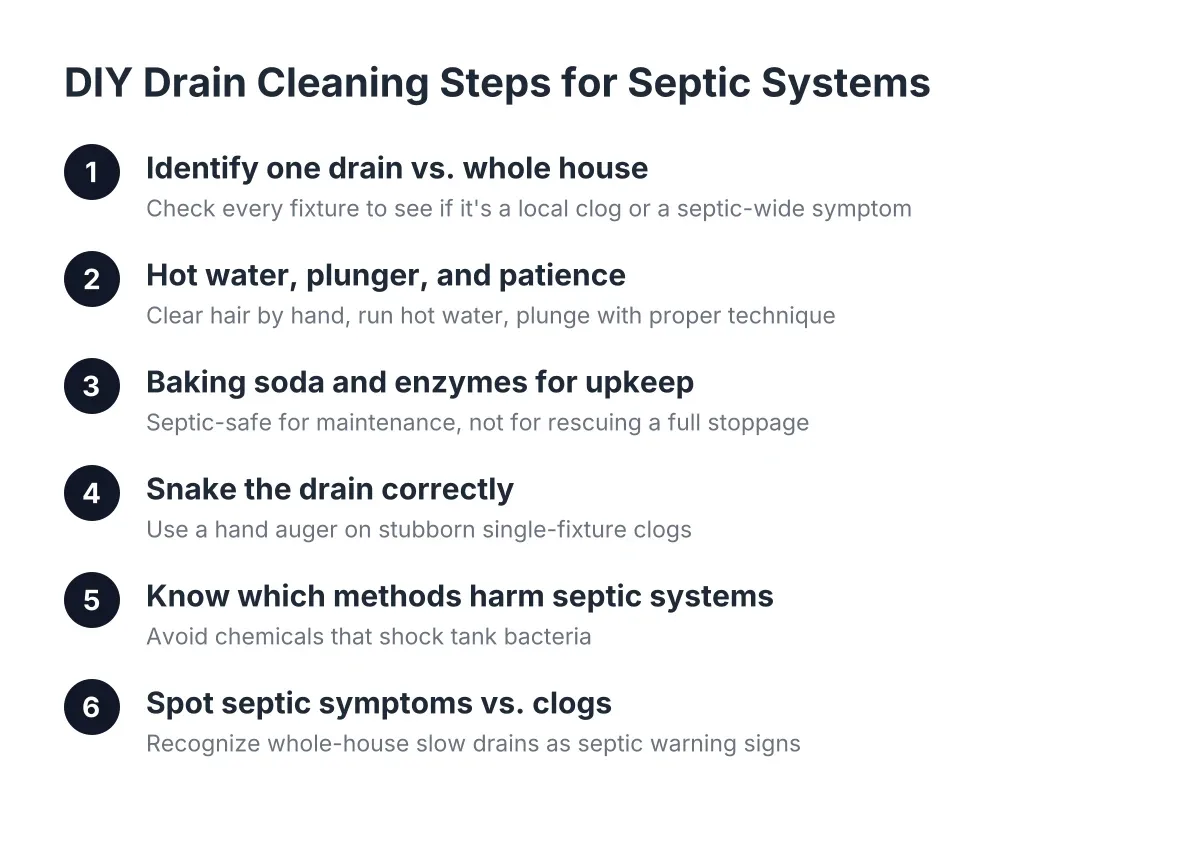
Step 1: Figure Out If It's One Drain or the Whole House
Start here before you touch a plunger. Walk the house and check every fixture: kitchen sink, bathroom sinks, tubs, showers, and toilets.
If only one drain is slow, you likely have a local clog. Hair, soap scum, or grease sitting in the trap or the branch line. The DIY drain cleaning methods in Steps 2 through 4 will handle most of these.
If every drain is slow, or the lowest drain in the house backs up when you run water upstairs, stop. That points to the main line, the septic tank, or the drain field. According to the US EPA, a single pipe carries all household drains to the septic tank, where solids settle out until a pump-out removes them. When that one pipe or that tank has a problem, no amount of baking soda fixes it. Skip to Step 6.
Other whole-system warning signs:
- Gurgling from toilets or tubs when the washing machine drains
- Sewage smell in the yard or near the tank lids
- Wet, soggy ground over the drain field when it hasn't rained
- Backup at the lowest fixture first, often a ground-floor shower
For a landlord with a duplex or fourplex on a shared tank, this first check matters even more. Say a tenant in unit A reports a slow tub while unit B drains fine. That's probably a local clog in unit A's branch line. If both units slow down the same week, the shared tank or main line is the suspect, and a plunger in unit A is wasted time.
Step 2: Start With Hot Water, a Plunger, and Patience
For a single slow drain, the safest method is also the cheapest. Pull the stopper or drain cover and remove any visible hair or gunk by hand or with a cheap plastic hair snake. This alone clears a surprising number of bathroom sink and tub clogs.
Next, run hot tap water for a few minutes to soften soap and grease. Not boiling water; boiling water can soften PVC joints and stress older glue connections. If you later find a drip under the sink, a pvc leak repair is a simple fix, but it's one you didn't need to create.
Then plunge. Use a cup plunger for sinks and tubs, and a flange plunger for toilets. Block the overflow opening on a sink with a wet rag so your plunging pressure goes down the pipe, not out the overflow. Ten to fifteen firm strokes, then test with water. Repeat two or three rounds before you call it.
How to Unclog a Toilet and Avoid Septic Damage Through Smart DIY Drain Cleaning
To unclog a toilet without chemicals, use a flange plunger with a firm seal over the outlet, plunge with steady strokes, and follow with a toilet auger if the plunger fails. Never pour chemical drain opener into a toilet; it pools in the bowl, can crack porcelain from heat, and flows straight to your septic tank.
One more toilet note for landlords: check for phantom running while you're there. The U.S. Environmental Protection Agency reports a single leaky or running toilet can waste as much as 200 gallons of water per day. On a septic system, that water floods the tank and drain field around the clock, and it can make every drain in the unit act "clogged" when the real problem is a saturated field.
Step 3: Use Baking Soda and Enzymes for Maintenance, Not Rescue
Baking soda and vinegar get most of the internet's attention, and they're septic-safe. Just know what they actually do. The fizzing loosens light film and knocks down odors. It will not eat through a packed plug of hair and grease. Treat it as maintenance between real cleanings, not a rescue tool.
Enzyme or bacteria-based drain treatments are also septic-friendly for slow, greasy kitchen lines. They work over days, not minutes, so use them on a drain that's sluggish, not one that's fully stopped.
Be skeptical of anything promising to dissolve the problem overnight. Commercial septic tank additives marketed to decompose or dissolve sludge lack strong scientific backing, according to Washington State University Extension. The same skepticism applies to miracle drain powders sold to septic households.
Step 4: Snake the Drain the Right Way
A hand auger, sold at any hardware store for roughly $20 to $40, is the most effective DIY drain cleaning tool for a stubborn single-fixture clog. Feed the cable in until you hit resistance, crank to hook or break up the clog, and pull back. Run hot water to flush.
A few rules keep this from going wrong:
- Use a toilet auger on toilets, never a straight cable, which scratches the bowl.
- On sinks, remove the P-trap first and snake the wall pipe directly; half the time the clog is sitting in the trap anyway.
- Don't force a small hand snake past repeated hard resistance. You may be hitting a fitting, not a clog, and you can punch through old pipe.
- If you pull back grease repeatedly, a snake alone won't fix it. An auger pokes a hole through grease; the buildup on the pipe walls stays and the clog comes back. Grease lines need full wall cleaning, which is jetting territory, not hand-tool territory.
Grease deserves the extra caution. The U.S. Environmental Protection Agency found grease is the most common cause of reported sewer blockages at 47%, and research in the International Journal of Environmental Science and Technology estimates 30 to 40% of sewer clogs come from fat, oil, and grease deposits. Kitchen lines clog from the walls inward.
Step 5: Know Which DIY Drain Cleaning Methods Damage a Septic System
This is the step that separates septic households from sewer households. Some common methods carry real damage risk on a septic system.
Skip chemical drain openers. Diluted household bleach in a full load of laundry is a non-issue for the tank. Pouring a full bottle of caustic drain cleaner down one drain is different; that concentrated dose lands in the tank all at once and can knock back the bacteria that digest your solids. A tank that stops digesting fills faster, pushes solids toward the leach field, and shortens the field's life.
Skip pressure gimmicks on old pipe. Air-blast cartridges and drill-powered cleaning tools can crack aged fittings and blow apart glued joints. That turns a clog into a leak inside a wall, and now you're searching drain repair near me for a much bigger job.
Skip DIY pipe rerouting. Unlike electrical wiring, drain plumbing has to hold a consistent downhill pitch or waste stagnates and clogs return. This matters for new construction owners in Fontana finishing a build on a fresh septic install: resist the urge to move or extend drain lines yourself after the county has signed off. A flat spot you create in 2026 becomes the chronic clog you snake every winter after.
Also skip poking blindly at the tank. If you suspect a clogged inlet baffle, a careful homeowner can sometimes relieve it with a soil probe or metal pipe to buy time until a pump-out. But septic tanks produce dangerous gases, and open lids are a fall hazard. Never lean into a tank, and never enter one.
Step 6: Recognize When the Slow Drain Is Actually a Septic Symptom
A slow drain becomes a septic symptom when it shows up at every fixture, follows heavy water use, or comes with smells and soggy ground outside. In that case, the pipe isn't clogged; the system has nowhere to send the water. Snaking the sink will not fix a full tank or a saturated leach field. Understanding when DIY drain cleaning for septic systems has reached its limits is critical to preventing costly repairs.
Here is the honest math on why guessing wrong is expensive. EPA guidance puts regular septic maintenance at $250 to $500 every three to five years, versus $5,000 to $15,000 to repair or replace a failed conventional system. Every bottle of caustic cleaner poured into a struggling tank pushes you toward the second number.
While you wait for a septic pumper, cut the water load. Space out showers, hold laundry, and skip the dishwasher. Less water into the tank means less pressure on a tired drain field, and it can keep drains usable for a few days. This is a stopgap, not a fix.
A professional visit earns its cost here. Main line drain cleaning from the cleanout, or snaking back from the tank side toward the house, clears blockages between house and tank that no bathroom-sink tool reaches. A septic system inspection can tell you whether the tank needs a pump-out, the effluent filter is plugged, or the leach field is the real problem. Locating and pulling a buried effluent filter is harder than it sounds, which is one reason regular inspection beats emergency digging.
Step 7: Prevent the Next Clog Instead of Fighting It
The cheapest DIY drain cleaning method is the clog that never forms. On a septic system, prevention runs through what goes down the drain and how often the tank gets pumped.
- Pump the tank on schedule. Solids that build up in the tank migrate into drain lines and the leach field, and that's how fields die early.
- Keep grease out of the kitchen sink. Wipe pans into the trash. Grease is the top clog cause, and it also feeds the scum layer in your tank.
- Reduce solids overall. Scrape plates into the trash instead of running the garbage disposal. Less solid load stretches the interval between pump-outs.
- Use hair catchers in tubs and showers; they cost a few dollars and stop the most common bathroom clog.
- Flush nothing but waste and toilet paper. Wipes, even "flushable" ones, snag in baffles and lines.
For a small landlord across a few Fontana-area units, put pumping and drain checks on a calendar tied to lease turnover instead of waiting for a tenant complaint. Routine drain cleaning of a greasy kitchen line during a vacancy costs less than an emergency backup call during a tenancy, and it protects the shared tank that all your units depend on.
The short version: use your hands, hot water, a plunger, and a snake on single-fixture clogs. Keep chemicals, boiling water, and guesswork away from a septic house. And the moment more than one drain slows down, stop cleaning drains and start thinking about the tank.
If you need septic tank pumping, Fontana Septic can help.
Prefer to talk it through? Call (909) 316-2368 — a quick call is usually the fastest way to get a straight answer for your situation.