
Signs Your Grease Trap Needs Cleaning: A Step-by-Step Check for Landlords
If you own rental units or a small commercial kitchen in Fontana, restaurant grease trap cleaning is one of those jobs that only gets attention when something smells wrong. By then, the trap is usually past due. The good news for a landlord juggling multiple properties: the warning signs show up in a predictable order, and you can check for them in about twenty minutes. This guide walks you through those checks step by step, so you know when to call for a pump-out instead of waiting for a tenant to call you about a backup.
There is another reason this matters for property owners in our area. Many rental homes and small commercial buildings around Fontana sit on septic systems, and the same crew that handles septic tank pumping can usually handle the grease trap too. One local point of contact for both means one schedule, one invoice trail for your accounting, and one number to call when a tenant reports a slow drain.
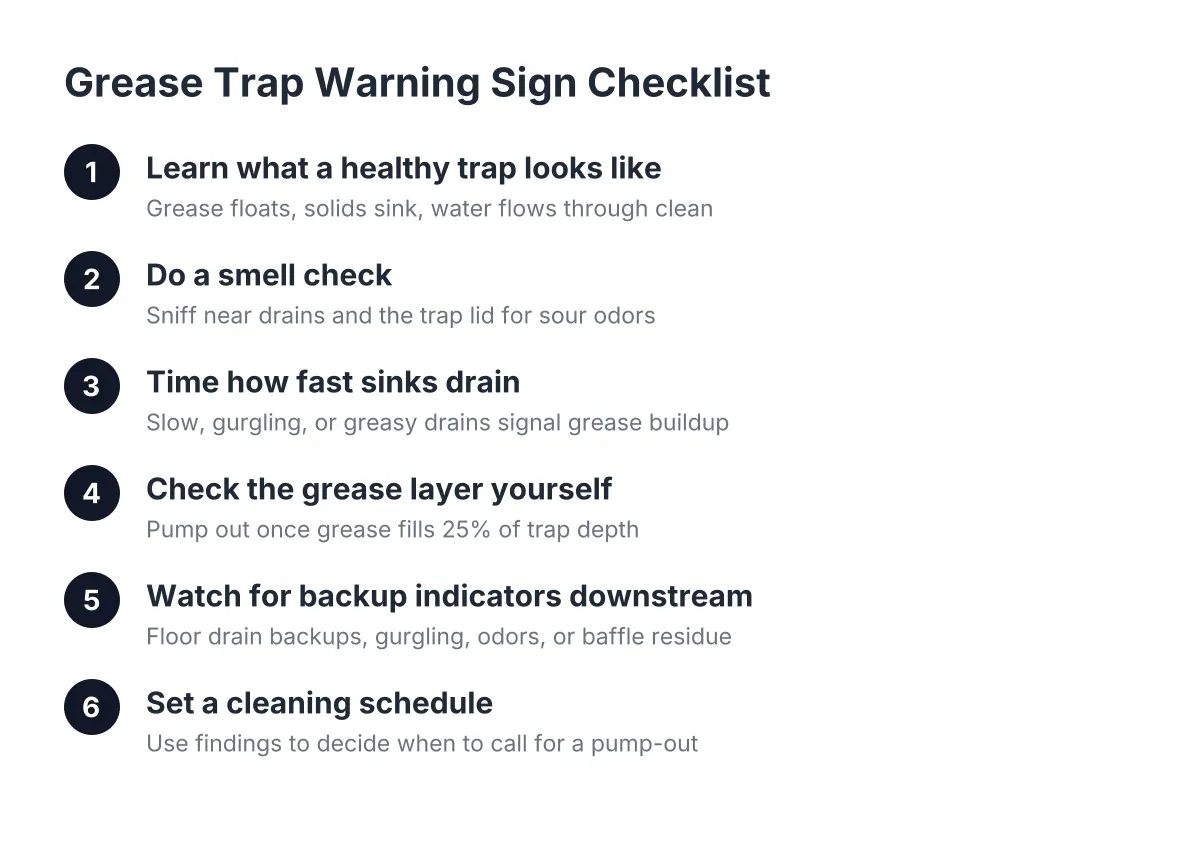
Step 1: Learn What a Healthy Grease Trap Looks Like
Before you can spot trouble, you need a baseline. A grease trap slows down kitchen wastewater so fats, oils, and grease separate from the water. Grease floats to the top and forms a scum layer, food solids sink to the bottom, and the water in the middle flows out to the sewer or septic system. That layering is the same thing that happens inside a septic tank; according to the U.S. Environmental Protection Agency, fats, oils, and grease float and form a scum layer on top while solids sink to form sludge on the bottom.
A trap that is working has room for that separation. A trap that is full has no room, so grease passes straight through into your drain lines. That is when the expensive problems start. The U.S. Environmental Protection Agency found that grease from restaurants, homes, and industrial sources is the most common cause of reported sewer blockages, at 47%.
Step 2: Do a Smell Check Near Drains and the Trap Lid
Odor is usually the first sign, and it shows up before drains slow down. Walk the kitchen and stand near the floor drains and the sink. A sour, rancid smell that lingers even after the kitchen is cleaned means the trapped grease has started to break down. Trapped food solids rot, and the gas finds its way back up the drain lines.
Next, check near the trap itself, whether it sits under the sink or outside in the ground. A strong smell at the lid area, or outdoors near an in-ground trap, points to a trap that is at or past capacity. Do not ignore an outdoor odor just because the kitchen smells fine; large in-ground interceptors often stink outside first.
What the smell tells you
- Faint odor only when water runs: early buildup, schedule a cleaning soon.
- Constant odor in the kitchen: the trap is likely full and pushing gas back up the lines.
- Odor outside near the trap or cleanout: the trap or the line downstream is overloaded.
Step 3: Time How Fast the Sinks Drain
Slow drains are the second warning sign, and they are easy to measure. Fill the kitchen sink a few inches, pull the stopper, and watch. Water that swirls down slowly, gurgles, or leaves a greasy film on the basin is telling you the line between the sink and the trap is coating over with grease.
Here is the part landlords miss: grease clogs behave differently than paper clogs. Grease clings to the pipe walls and narrows the line gradually, so snaking a hole through the middle gives you a week or two of relief before it closes again. A drain that keeps slowing down after cleaning is a trap problem, not a drain problem, and the fix is a full pump-out, not another round with a snake.
For a multi-property owner, this is the sign to act on. Suppose you own a fourplex in Fontana with a shared trap and a tenant texts you about a gurgling kitchen sink. If you send a handyman to snake it, you will likely get the same text next month. If you schedule grease trap cleaning instead, you solve the actual cause and the tenant calls stop.
Step 4: Check the Grease Layer Yourself
If you can open the trap safely, this check removes all guesswork. Pop the lid and look at the top layer. A common rule used across the industry is the 25% rule: when grease and solids fill a quarter of the trap's depth, it is time to pump. You can gauge this with a clean stick or rod pushed straight down; the grease mat leaves a visible mark.
Look at color too. Thick, pale, crusted grease means the trap has gone too long between cleanings and has hardened. Hardened grease takes longer to remove and is more likely to have pushed grease downstream into your pipes. In addition, standing water sitting above the outlet level suggests the outlet side is already restricting flow.
However, know your limits here. Confined-space hazards, heavy lids, and sewer gas are real risks on larger in-ground interceptors. If the trap is buried, deep, or shared across units, leave the lid to a professional crew with the right equipment.
Step 5: Watch for Backup Indicators Downstream
The last warning stage is backup, and it rarely starts at the kitchen sink. Grease that escapes a full trap cools and solidifies farther down the line, often at the first fitting or, on septic properties, at the inlet baffle of the tank. According to the Washington State Department of Health, a clogged inlet baffle is a common cause of septic backups and one of the first things to check when a line into the tank blocks up.
Therefore, watch these downstream signs on any septic-served rental:
- Water backing up in a floor drain when the sink runs.
- Gurgling in fixtures far from the kitchen.
- Sewage odor or soggy patches over the tank or leach field.
- Yellow or white residue at the septic cleanout or baffle instead of normal brown, a telltale sign grease is going down the drains.
Any one of these on a rental property is worth a same-week service call. One kitchen backup in an occupied unit can turn into a habitability complaint fast, and a failed septic system costs far more than routine service. The U.S. Environmental Protection Agency puts routine septic maintenance at $250 to $500 every three to five years, versus $5,000 to $15,000 to repair or replace a failed system.
Step 6: Set a Cleaning Schedule Based on What You Found
Once you have run these checks, use the results to set a recurring interval instead of waiting for symptoms to return. Most small commercial kitchens land somewhere between monthly and quarterly; a light-use kitchen in a rental unit may stretch longer. The volume involved is bigger than most owners expect. According to the U.S. Environmental Protection Agency, a single restaurant can discharge between 800 and 17,000 pounds of grease a year if it is not managed.
For example, say you manage three septic-served rentals around Fontana and one small commercial kitchen. A workable 2026 schedule might look like: quarterly grease trap service at the kitchen, an annual septic system inspection at each rental, and septic tank pumping on a three-to-five-year rotation per property. Put it all on one calendar with one provider, and you get dated service records for your files and no more scrambling when a tenant calls about a slow drain.
How often should a restaurant grease trap be cleaned?
A restaurant grease trap should be cleaned when grease and solids fill about 25% of the trap's depth, which for most working kitchens means every one to three months. High-volume fryer-heavy kitchens may need monthly service, while light-use kitchens can sometimes go a full quarter. Local rules in San Bernardino County can also set minimum intervals, so confirm requirements for your property.
Keep your pump-out receipts either way. If a sewer authority or health inspector asks about grease handling, dated service records answer the question in seconds.
Why One Crew for Septic and Restaurant Grease Trap Cleaning Pays Off
Grease traps and septic tanks fail for the same reason: fats, oils, and grease overload a tank that was designed to separate them. A septic pumper already has the vacuum truck, the disposal route, and the habit of checking baffles and outlet lines. Waste pumped from tanks is hauled by truck to a treatment plant for disposal, as the New Hampshire Department of Environmental Services notes, so the trap and the tank ride the same route.
For a landlord, the practical win is vendor consolidation. One local Fontana crew that handles septic pumping, drain cleaning, and grease trap service means one relationship covering every property, whether the problem is a full trap at a commercial unit or a slow drain at a septic-served rental. Research published in the International Journal of Environmental Science and Technology estimates 30 to 40% of sewer clogs come from fat, oil, and grease deposits, so a crew that manages grease well prevents most of the calls you would otherwise get.
The signs run in order: odor first, slow drains second, visible grease third, backups last. Catch them at the smell stage and restaurant grease trap cleaning stays a routine line item. Wait for the backup stage and you are paying for emergency service, tenant goodwill, and possibly a septic repair on top. Twenty minutes of checking, on a schedule, is the cheaper habit.
If you need septic tank pumping, Fontana Septic can help.
Prefer to talk it through? Call (909) 316-2368 — a quick call is usually the fastest way to get a straight answer for your situation.